About Noctua janthina (Denis & Schiffermüller), 1775
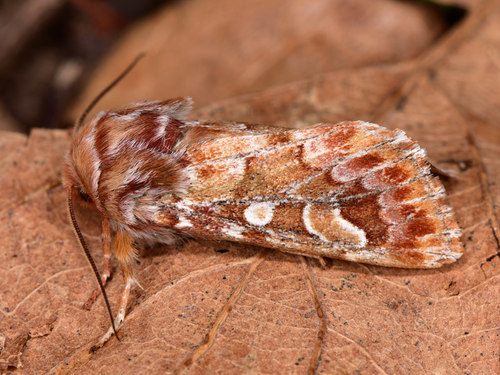
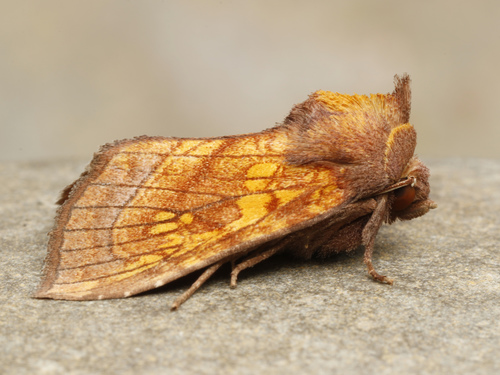
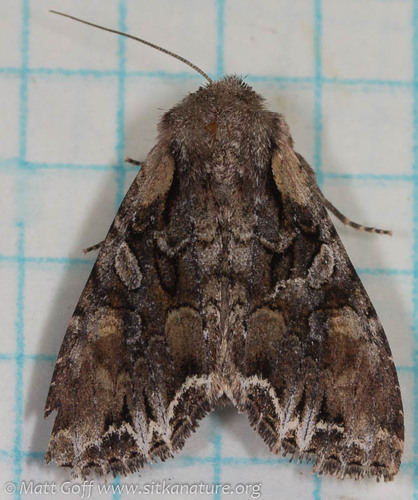
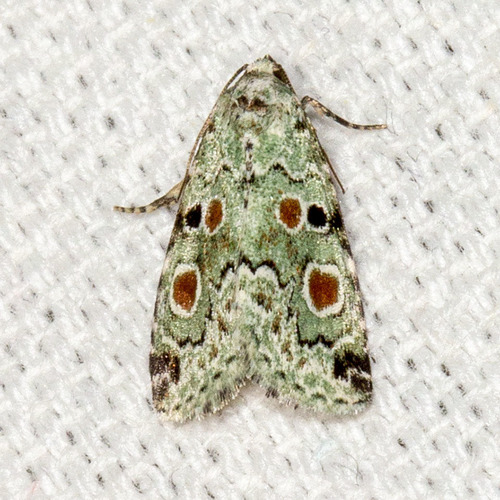
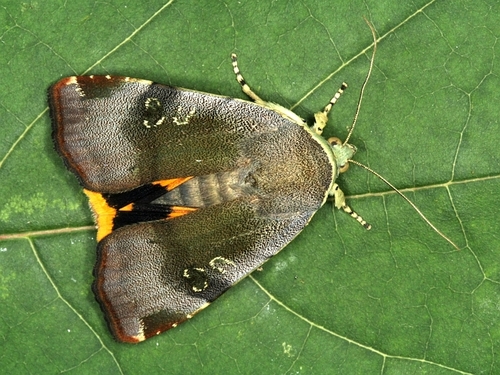
Noctua janthina (Denis & Schiffermüller), 1775, commonly known as the lesser broad-bordered yellow underwing or Langmaid's yellow underwing, is a moth species belonging to the family Noctuidae. This moth is distributed across southern and central Europe, as well as southern Sweden. Like other species in the Noctua genus, it has bright orange-yellow hindwings. As reflected in its common name, the black sub-terminal bands on its hindwings are very broad, making up about half of the total hindwing area. Its forewings have cryptic patterning, and are generally more attractively marked than those of related species, with variegated shading in tones of buff and purplish-brown. The wingspan of this moth measures 34–44 mm. Noctua janthina can only be distinguished from Noctua janthe and the disputed species Noctua tertia through examination of its genitalia, as documented in Townsend et al. Adult moths fly at night from the second half of July through August, and are attracted to both light and sugar bait. The larvae of this species are brown, with v-shaped markings running along the back. They feed on a wide range of host plants, which include Arum (Cuckoo pint), Crataegus (Hawthorn), Hedera (Ivy), Primula, Prunus (Blackthorn), Rubus, Rumex, Salix (Willow), Ulmus (Elm), Urtica (Nettle), and Viola. This species overwinters in its larval stage.