About Niorma chrysophthalma (L.) S.Y.Kondr., Kärnefelt, Elix, A.Thell, M.H.Jeong & Hur
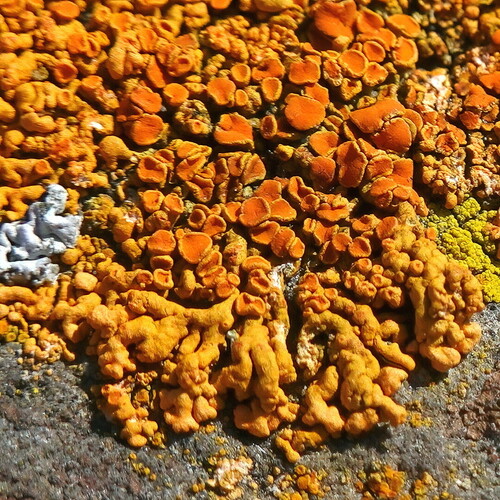
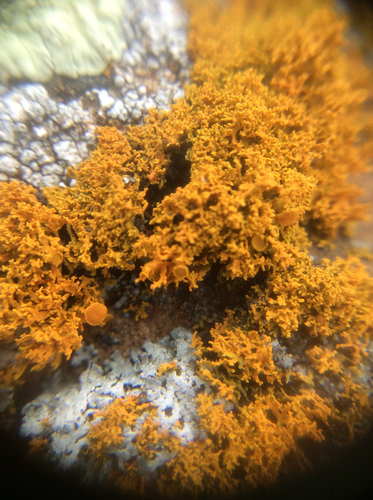
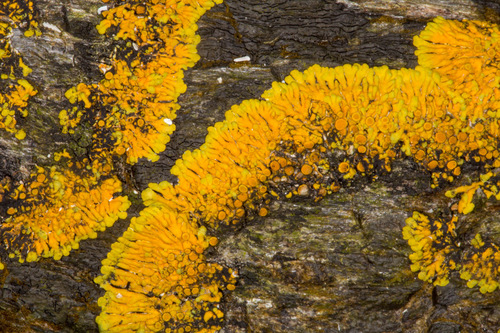
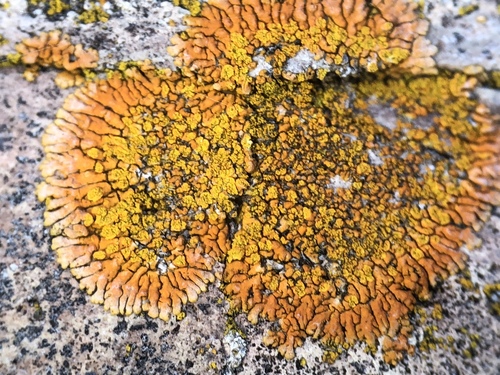
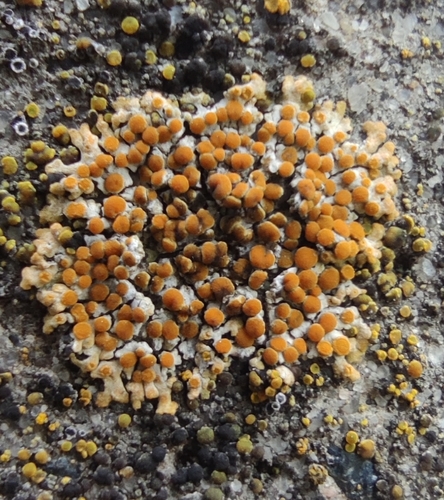
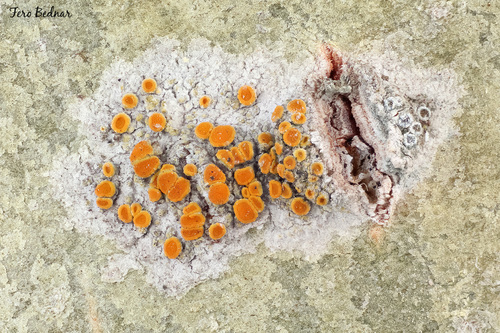
Niorma chrysophthalma (L.) S.Y.Kondr., Kärnefelt, Elix, A.Thell, M.H.Jeong & Hur, previously known as Teloschistes chrysophthalmus, is commonly called the gold-eye lichen or golden-eye. It is a fruticose lichen that grows branching lobes. Its sexual reproductive structures, called apothecia, are bright orange, with hair-like spiny projections called cilia arranged around their outer rim. This lichen has a cosmopolitan distribution, found in both the Northern and Southern Hemispheres. It is most common in dry, sun-exposed areas with a temperate climate. It is often localized and rare across much of its range, and is rarely abundant. Its colonies most often form along coastal areas. It is a twig-growing species, meaning it grows on twigs. In 2012 and 2013, several new sites hosting this species were discovered along the coast of England, where it grows on host trees including hawthorn and apple. In America, it has been recorded growing on California live oak, dwarf coyote brush, Peritoma arborea, and magnolias. In Aotearoa New Zealand, it has been found growing on Pinus radiata debris in the sand dunes of Foxton Beach. This species has been studied for its antiviral secondary metabolites. It produces the compound parietin, which shows virucidal effects against certain arenaviruses from the family Arenaviridae.