About Nihonhimea mundula (L.Koch, 1872)
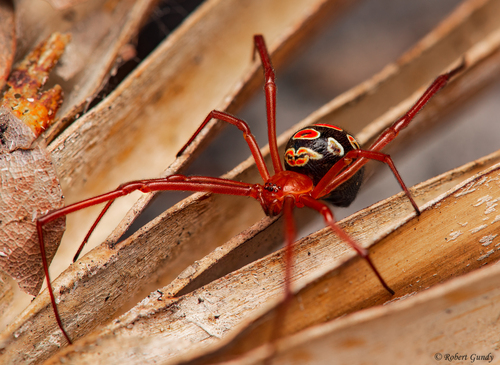
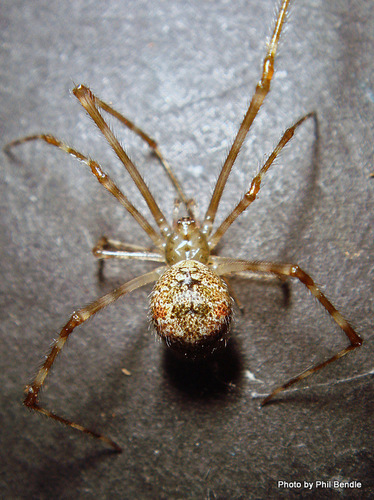
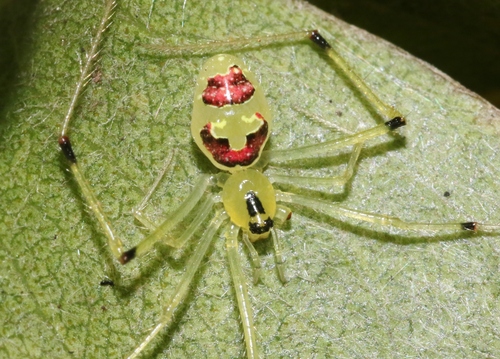
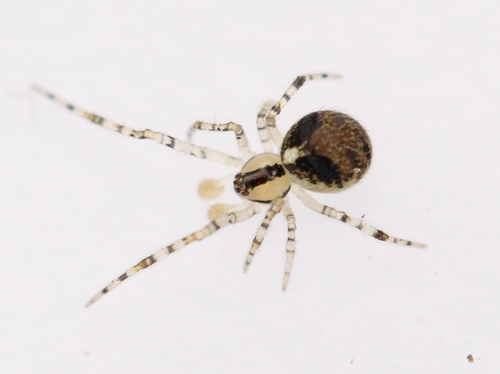
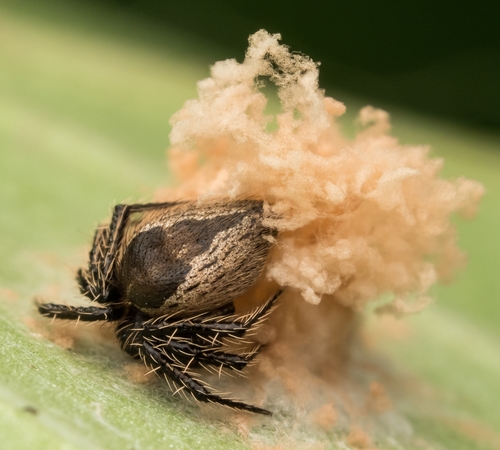
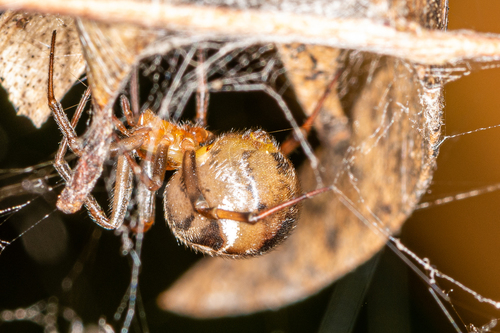
Nihonhimea mundula (L.Koch, 1872) shows the typical characteristics of theridiid spiders, with a globular opisthosoma and relatively long legs. Based on historical descriptions, female N. mundula have a brownish-yellow cephalothorax that is darker along the sides, while their chelicerae, maxillae, and labium are yellowish-brown. Their sternum is also yellowish-brown, but becomes lighter in color toward the labium. The pedipalps are brownish-yellow, and the legs are brownish-yellow, with the femora having a slight blackish tint. The tibiae have brown tips at their joints, while the metatarsi and tarsi are somewhat darker. The opisthosoma is black on the upper side, transitioning to brown toward the posterior end, and marked with yellowish spots. The underside of the body is brownish-yellow, with a black area in the center. This species exhibits sexual dimorphism: males are smaller than females. Historical measurements from Hogg (1919) recorded one male specimen with a cephalothorax 2 mm long and 1 mm wide, and an opisthosoma 2 mm long and 1.5 mm wide. N. mundula has a wide distribution across the Indo-Pacific region. It has been recorded in Seychelles, India, Sri Lanka, Malaysia, Indonesia, Australia (especially northern areas including Western Australia, the Northern Territory, and Queensland), Papua New Guinea, and New Caledonia. This spider constructs distinctive platform webs: these webs are made of a horizontal, close-meshed silk sheet suspended above a network of threads. The spider usually builds a retreat at the center of the web, often using curled leaves or loosely silked leaf detritus for this purpose. N. mundula is a specialist predator that feeds primarily on other spiders, including both web-building spiders and jumping spiders, as well as the eggs of these spiders. The platform web acts as an effective hunting mechanism. When insects or other prey fly into the network of threads above the platform, they fall onto the silk sheet below, and the spider quickly captures them from its retreat. The webs also act as microhabitats for a variety of other organisms, including small moth larvae that scavenge along the silk lines, and other spiders that move into the outer parts of the web to search for prey. Among these associated organisms are prey-stealing spiders of the genus Argyrodes, including Argyrodes incursus, which is a specialist predator of N. mundula.