About Nigella damascena L.
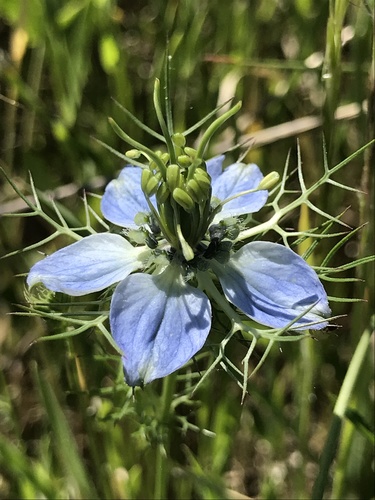
Nigella damascena L. grows 20 to 50 cm (8 to 20 inches) tall. It has alternate, pinnately divided leaves that have a fine, thread-like shape. Its flowers bloom in early summer; they most commonly come in different shades of blue, but can also be white, pink, or pale purple, and have 5 to 25 sepals. The plant’s true petals are tiny, claw-shaped structures located at the base of the stamens. Only the sepals are the colored part of the flower’s perianth. The compound pistil holds four to five carpels, each with an upright style. The fruit is a large, inflated capsule that develops from a compound ovary, formed from several joined follicles that each hold many seeds. This structure is quite unusual for a member of the buttercup family. The capsule turns brown in late summer. This plant self-seeds readily, so it will regrow in the same location year after year. The toxic alkaloid damascenine is found in the seeds of Nigella damascena, but an in vivo study in mice and an in vitro assessment on human cell lines have not found any evidence of toxicity. This easy-to-grow plant has been a well-known feature of English cottage gardens since the Elizabethan era, valued for its ferny foliage, spiky flowers, and bulbous seed heads. It is now widely cultivated across the temperate world, and many cultivars have been developed for garden use. 'Persian Jewels' is a mixed cultivar that produces white, pink, lavender, and blue flowers. 'Persian Rose' has pale pink flowers. Other named cultivars include 'Albion', 'Blue Midget', 'Cambridge Blue', 'Mulberry Rose', and 'Oxford Blue'. 'Dwarf Moody Blue' grows to around 15 cm (6 inches) tall. The pale blue-flowered ‘Miss Jekyll’ and the double white-flowered 'Miss Jekyll Alba' have both been awarded the Royal Horticultural Society's Award of Garden Merit.