About Nicotiana rustica L.
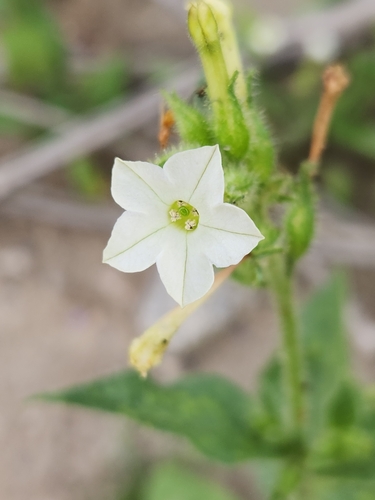
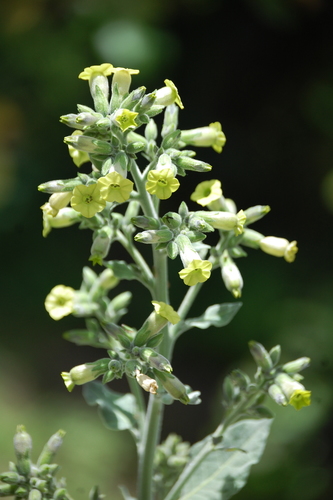
Nicotiana rustica L., commonly called Aztec tobacco or strong tobacco, is a member of the Solanaceae family that originates from South America and grows in rainforests. It is an extremely potent type of tobacco, with nicotine levels up to nine times higher than those found in common Nicotiana species like Nicotiana tabacum, also known as common tobacco. More precisely, the leaves of N. rustica can have a nicotine content as high as 9%, while the leaves of N. tabacum only contain around 1 to 3% nicotine. The high nicotine concentration in its leaves makes the species useful for manufacturing pesticides, and it also holds a wide range of culture-specific uses across the globe. Today, N. rustica is no longer widely cultivated in North America, where it has been replaced by N. tabacum; the only exception is small-scale cultivation by certain Native American tribes. In ecological terms, N. rustica acts as a larval host plant for two moth species: Chrysodeixis includens and Phthorimaea operculella. Confirmed pollinators of Nicotiana rustica are Augochlorella aurata, Lasioglossum perpunctatum, Bombus impatiens, Lasioglossum tegulare, Augochlora pura, Lasioglossum michiganense, Lasioglossum versans, Bombus vagans, Halictus ligatus, Lasioglossum oblongum, Halictus rubicundus, Megachile frigida, and Sphecodes heraclei.