About Nerodia fasciata (Linnaeus, 1766)
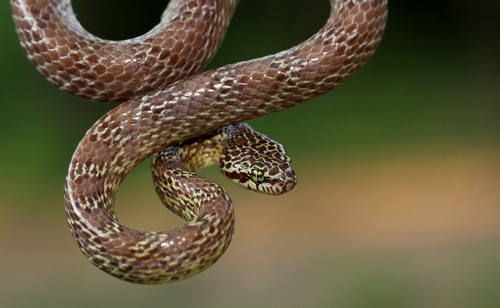
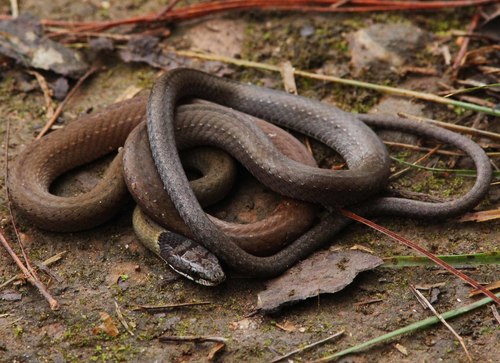
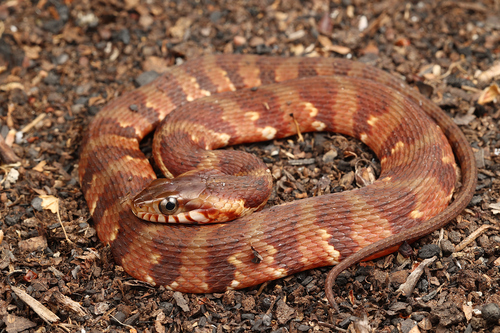
Adults of the banded water snake (Nerodia fasciata) usually have a total length between 56 and 107 cm (22 to 42 in). The recorded maximum total length for the Florida subspecies is 159 cm (62.5 in). This snake is typically gray, greenish-gray, or brown with dark crossband patterning. Many individuals are so darkly colored that their pattern is barely visible. The belly (ventrum) is normally off-white to white. Banded water snakes have flat heads and relatively thick, heavy bodies. A key identifying marker is a dark stripe that runs from the eye to the corner of the jaw. When irritated, the species releases a foul-smelling musk to discourage predators. Nerodia fasciata shows sexual dimorphism, with females generally being longer and heavier than males. On average, this snake sheds its skin once every four weeks. Because of its appearance, the banded water snake is often confused with other snakes that share its habitat, including the venomous cottonmouth. The native geographic range of Nerodia fasciata extends from southern Illinois south to Louisiana, and east to North Carolina and Florida. Introduced populations have become established in Texas and California, though some sources list eastern Texas as part of the species’ natural range. In 1992, the US Fish and Wildlife Service (USFWS) found both Nerodia fasciata and its congener the northern/common water snake (Nerodia sipedon) at three sites in California. In 2009, the USFWS Nerodia Working Group captured more than 300 banded water snakes in Los Angeles suburbs. In May 2016, the species was detected in the Colorado River basin near Yuma, Arizona. Additional trapping captured large numbers of the snakes, confirming that a thriving invasive population is present in this area. Nerodia fasciata lives in most types of freshwater environments, including lakes, marshes, ponds, and streams. Banded water snakes are active both day and night. They can often be seen basking on logs or branches that overhang water, or foraging in shallow water. They typically stay within emergent vegetation along shorelines, or in the shallow littoral zone of their habitat. They move more often than other species in the Nerodia genus. This species is ovoviviparous, meaning it gives birth to live young. Brood sizes range from 15 to 20 young, which are born in late July or August. Newborn banded water snakes have a total length of 200–240 mm (around 8.0–9.5 in). The banded water snake can hybridize with the common watersnake, though such hybridization does not happen often. Physical traits alone are not enough to identify these hybrids; DNA analysis is required for correct identification.