About Nerodia clarkii (Baird & Girard, 1853)
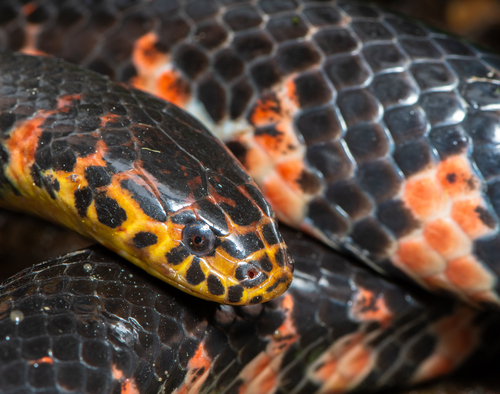
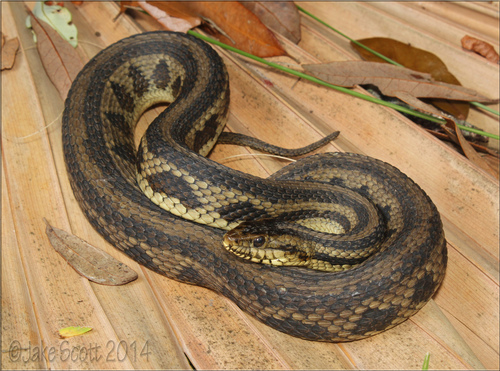
Salt marsh snakes, the common name for Nerodia clarkii, reach a total length including the tail of 15 to 30 inches, which equals 38 to 76 cm. Their pattern and coloration are highly variable. This species is most commonly found in coastal salt marshes, and inhabits both brackish and saltwater habitats; it often hides in crab burrows. While salt marsh snakes are common in habitats that suit their needs, they are wary and secretive by nature, so they are rarely encountered by people. All individuals of this species are semi-aquatic and give birth to live young. Additionally, all forms of this species can be identified by having either 21 or 23 rows of scales. The seawater where these snakes live constantly affects the electrolyte balance of their tissues due to osmosis. Their scaly reptilian skin works as a barrier that prevents external dehydration. However, if seawater is ingested, it pulls less salty fluid from the snake’s blood and tissues into its stomach. Nerodia clarkii is the only snake species that has established a permanent population in this highly saline environment. It only drinks rainwater when rain is available, and at all other times it consumes nothing but prey animals that have body fluids with the same low dilution as its own. All water-dwelling snake species, including Nerodia clarkii, are generally classified as non-venomous. However, their saliva contains a complex set of enzymes that can cause inflammation and edema in people who have been bitten by them.