About Nephromopsis chlorophylla (Willd.) Divakar, A.Crespo & Lumbsch
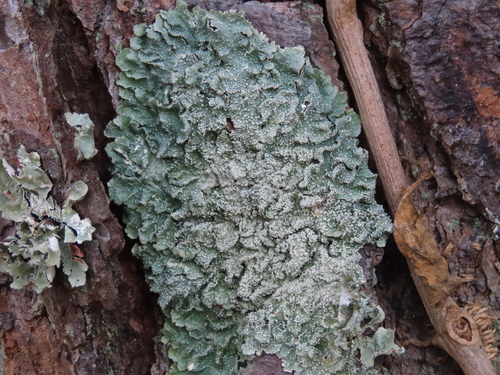
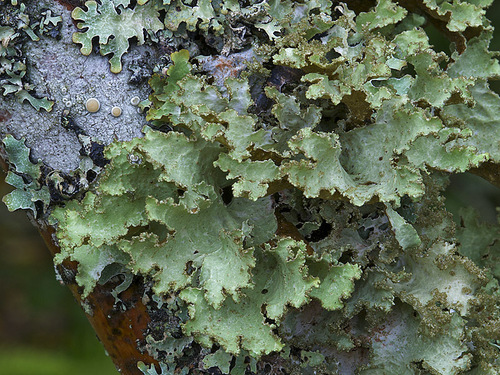
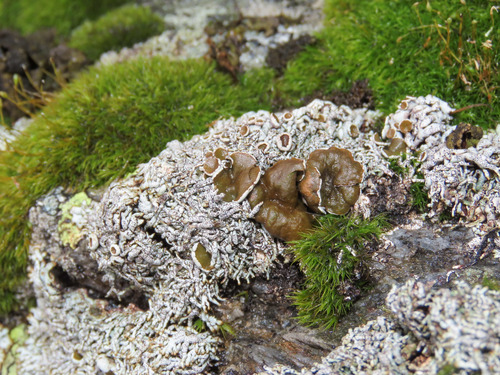
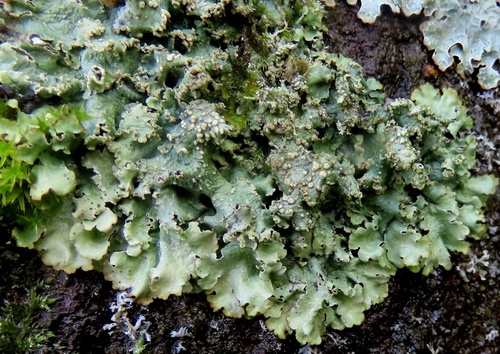
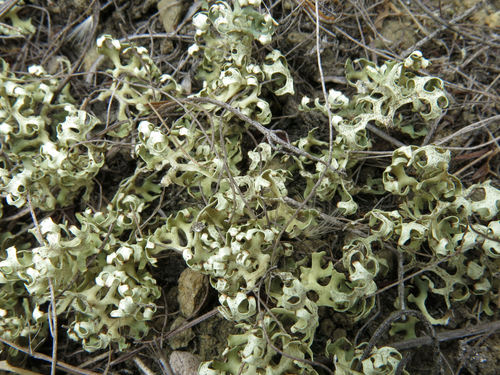
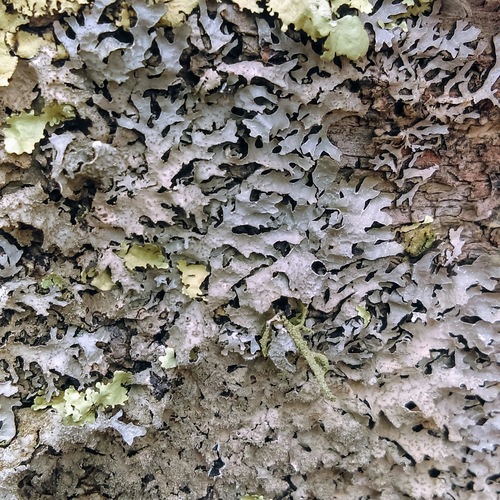
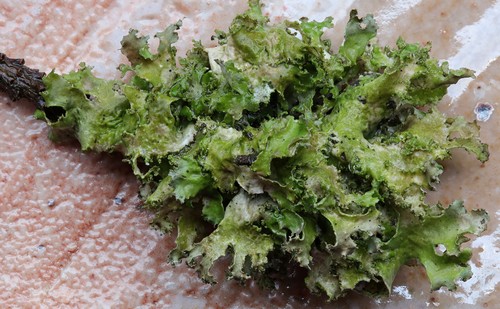
Nephromopsis chlorophylla (synonym Tuckermannopsis chlorophylla) is a small, foliose (leaf-like) lichen that forms loose tufts measuring 1–6 cm across, and only rarely forms a neat, compact rosette. This species produces few to many lobes, which are typically 1–3 cm long and 0.2–1 cm wide. The lobes are shallowly channelled like a trough, have wavy, crinkled, or notched edges, and are often deeply cut. Unlike many closely related lichens, the lobes do not lie flat against their substrate; instead they lift upwards from the substrate or curve up along their margins. The upper surface of the thallus ranges from pale to medium brown when dry, and turns olive-green and slightly translucent when wet. Tiny surface pores called pseudocyphellae are absent from this species. Instead, powdery reproductive granules called soredia are very common, growing along lobe edges. These soredia are grey-white and are the main method of dispersal for the lichen. The underside of the thallus ranges from white to pale brown, paling in colour toward the centre of the thallus, and is distinctly wrinkled. The underside bears very few root-like attachment structures called rhizines; any rhizines that are present are whitish in colour. The photosynthetic partner (photobiont) of Nephromopsis chlorophylla is a green alga belonging to the Trebouxia implex/Trebouxia suecica species group. Sexual reproductive structures are uncommon in this species. When present, the cup-shaped fruiting bodies called apothecia grow directly on the thallus (they are sessile), and have discs up to 3 mm across. The outer rim of the apothecium (the thalline margin) is itself covered in a dusting of soredia. Microscopic examination reveals that this species produces club-shaped asci measuring 30–40 × 7–10 μm. The asci contain straight, sparsely branched paraphyses with swollen tips; the ascospores released from the asci are spherical, and approximately 5 μm in diameter. Asexual spore-bearing structures called pycnidia are sparse, grow along lobe margins, protrude slightly from the thallus surface, and produce dumbbell-shaped conidia measuring 5–6 × approximately 1.5 μm. Standard chemical spot tests on the inner medulla layer of the thallus give negative results (C–, K–, KC–, Pd–), and the thallus shows no fluorescence under UV light. The major secondary metabolite detected in this species is protolichesterinic acid. This lichen is reported to have either a circumpolar or a cosmopolitan distribution, and occurs on at least four continents and many oceanic islands. It most commonly grows on the bark of trees and shrubs in forests, along roadsides, and on wooden fence posts. Rarely reported growing substrates include coarse-grained siliceous rocks and stone monuments. In northern North America, it is common in western conifer forests along the Pacific Coast, ranging north to Alaska. In Mexico, it is only known from historical collections made in Baja California. Additional confirmed locations where it occurs include South Africa, South America (Argentina, Chile, Falkland Islands), Australia, and New Zealand.