About Nephilengys malabarensis (Walckenaer, 1841)
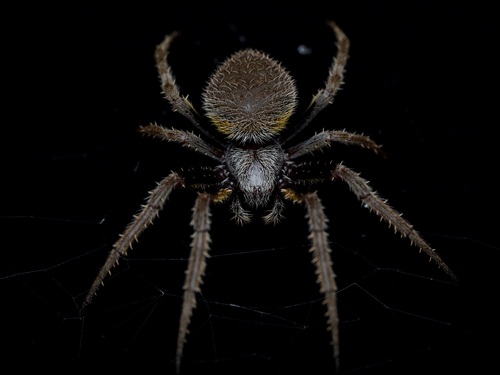
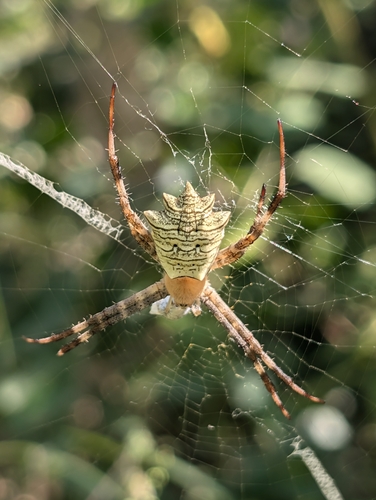
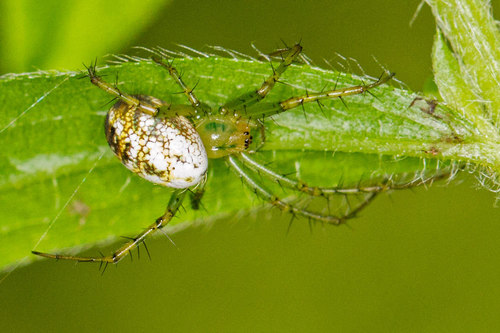
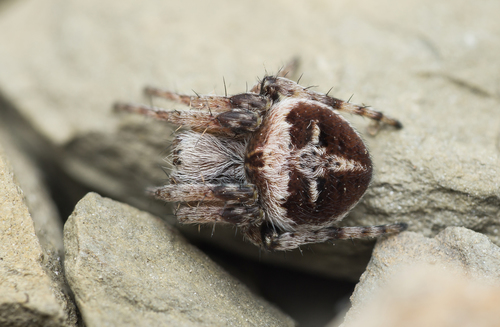
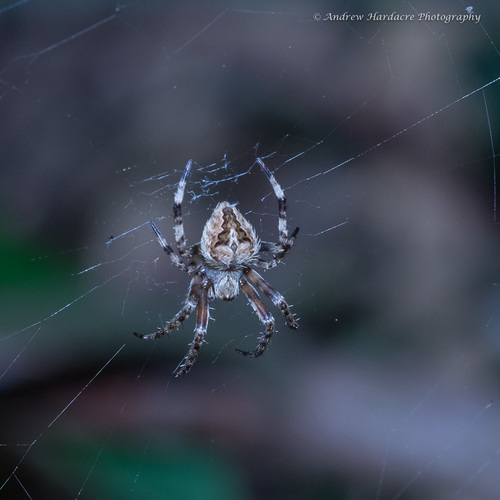
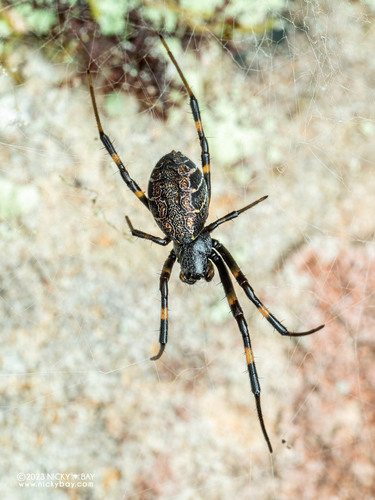
Nephilengys malabarensis (Walckenaer, 1841) is a relatively large orb-weaver spider that shows distinct sexual size dimorphism. Females are considerably larger than males: females have a total length ranging from 10.4 to 18.6 mm, while males only reach a total length of 5.0 to 5.9 mm. According to Walckenaer’s original 1841 description, the female has an approximate body length of 10 lines, equal to about 23 mm. Its cephalothorax is short, black, wide, and convex at the anterior portion. The sternum is smooth and pale yellow, with a uniform brown border near the leg attachments. The anterior median row eyes are larger and positioned closer together than the posterior median eyes. Lateral eyes are widely spaced, but both sit on the same prominence of the cephalothorax. Modern descriptions note that this species has considerable color variation. In females, the prosoma is typically dark red-brown. The sternum is characteristically orange in living specimens, and appears white in specimens preserved in alcohol; it often has broad lateral brown bands. The abdomen has variable coloration, ranging from white through various shades of grey to black. The abdomen dorsum is typically white with brown dots. In live females, the venter is brown with two large pairs of irregularly shaped orange patches, which are white in preserved material. Smaller orange dots are also present between the epigynum and the pedicel. Males are much smaller than females and have different coloration. Males have an orange prosoma and grey-black legs, with yellow coxae, trochanters, and proximal femora as an exception. In live males, the scutum is orange with a medial black stripe. The male abdomen dorsum is brown with paler patches, and the venter is brown with bright yellow oval or triangular spots. The anterior spots near the cephalothorax are triangular, while the posterior spots are finer and surround the anus. Longitudinal yellow streaks run along the sides of the male abdomen. The legs are reddish with brown rings at the joints, and are described as fine and not very elongated. This species occurs in South, Southeast, and East Asia, ranging from India and Sri Lanka east to the Philippines, north to Yunnan, China, northeast to Saga and Kompira, Japan, and east to Ambon Island, Indonesia. It is common around human dwellings, and less common in rainforest. The population at Niah inhabits cave entrances.