About Neoscona crucifera (Lucas, 1838)
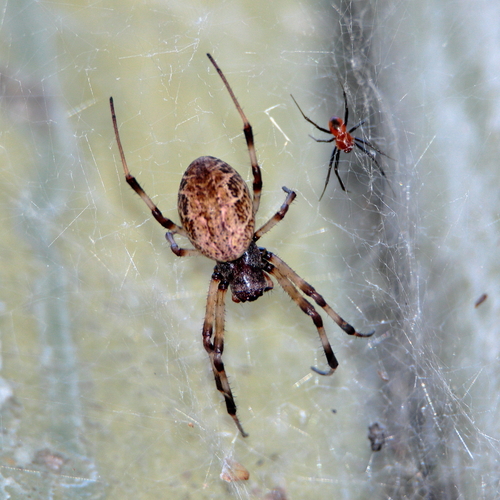
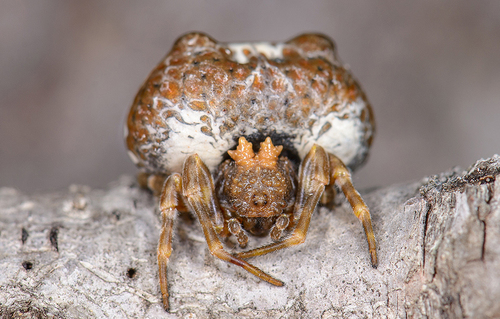
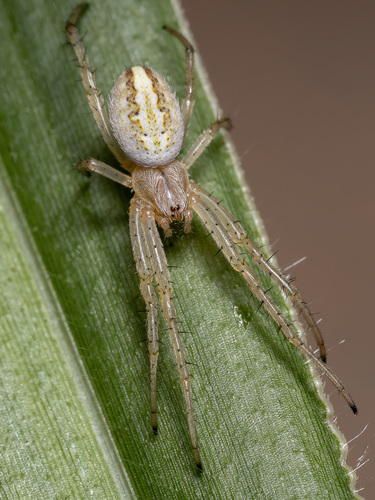
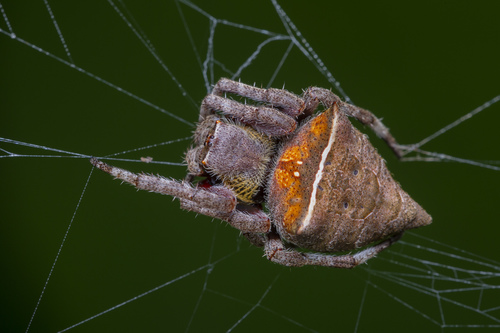
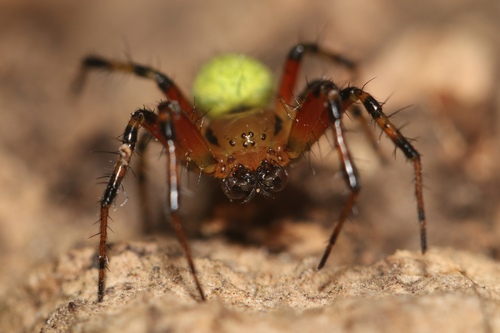
Neoscona crucifera is an orb-weaver spider that belongs to the family Araneidae. Its range covers the United States, extending from Maine to Florida on the eastern side, to Minnesota in the Midwest, to Arizona in the southwest, and into coastal southern California; it is also found in Mexico. Common names for this species are Hentz orbweaver (named for Nicholas Marcellus Hentz), spotted orbweaver, and barn spider. The name "barn spider" is also commonly used for a different species, Araneus cavaticus, and Neoscona crucifera has a similar appearance to Neoscona nautica. This spider is generally nocturnal, though females may become active during the day in the fall. Adult females measure between 9.5 and 19 millimeters (0.37 to 0.75 inches) in length, while males are slightly smaller. The upper surface of the abdomen is brown and covered in hairs. The legs feature alternating bands of light and dark brown. The underside of the abdomen is black, with two distinct white spots. This species shows relatively high variation in color and sometimes pattern, but most individuals have a rusty-red or golden orange coloration. It builds very large orb-shaped webs, often on buildings and other man-made structures, typically several feet above ground, especially near outdoor lights. Neoscona crucifera is most noticeable in late summer and early fall. The orb section of the web can reach nearly 2 feet (0.61 meters) in diameter. The species' eggsac is made from fluffy yellow threads woven into a rolled leaf, and encloses a lenticular or spherical egg mass 5–12 mm (0.20–0.47 in) in diameter, which can hold up to 1,000 eggs. Juvenile Neoscona crucifera are frequently preyed on by mud daubers. This spider will bite if it feels threatened, but its venom is not dangerous to humans.