About Neoptychodes trilineatus (Linnaeus, 1771)
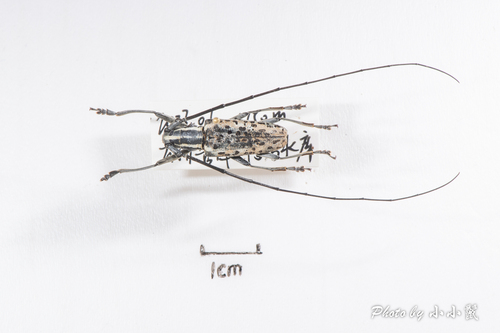
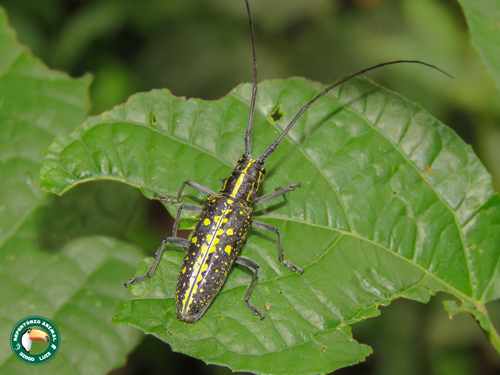
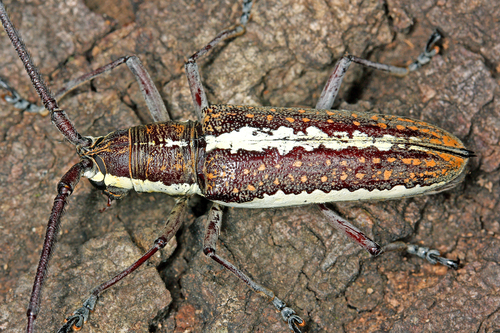
Neoptychodes trilineatus, first described by Linnaeus in 1771, shows a difference in body length between sexes. Males reach roughly 21 to 35 millimetres, which is 0.83 to 1.38 inches, while females reach roughly 19 to 31 millimetres, 0.75 to 1.22 inches. Body coloration of this species is quite variable across its wide range. Typically, the body background is greyish or dark brown, with orange-brown spots on the elytra and three white or yellow longitudinal bands; this banding pattern gives the species its Latin specific name trilineatus. The main known host plants for Neoptychodes trilineatus are Ficus carica, Morus microphylla, Salix sp. and Alnus sp. This species occurs in Belize, Costa Rica, Cuba, Guatemala, Guyana, Honduras, Nicaragua, Suriname, the United States, and Venezuela.