About Neopanax arboreus (Murray) Allan
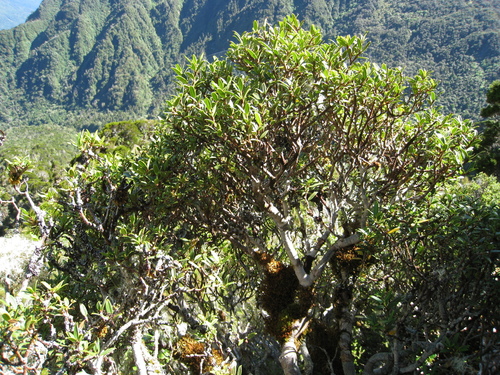
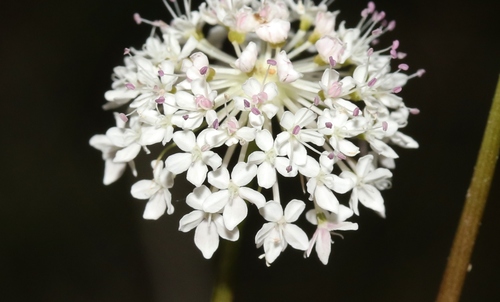
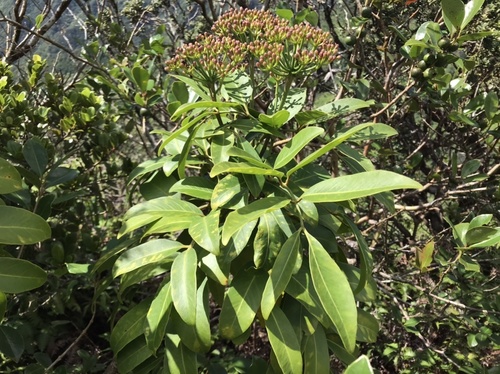
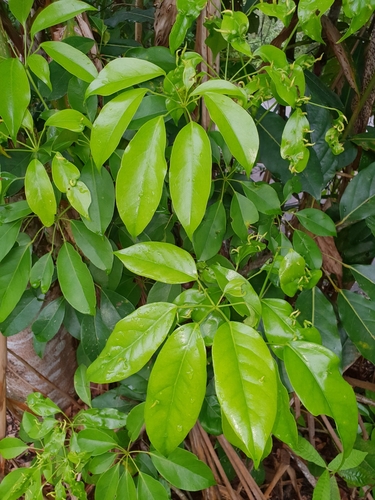
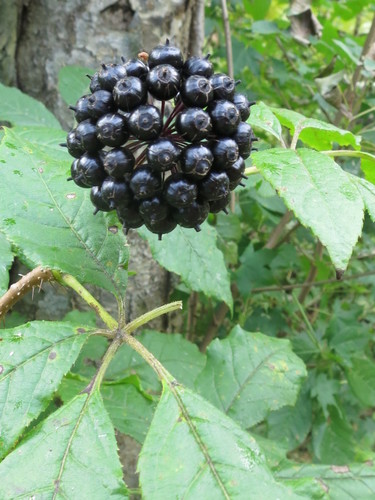
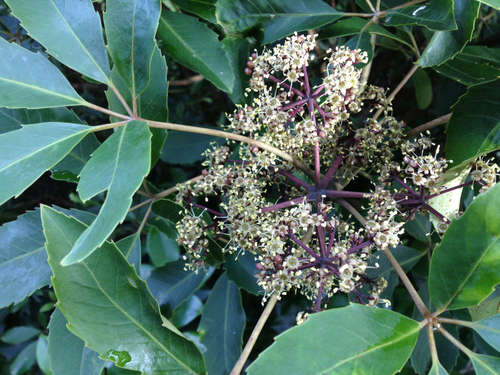
Neopanax arboreus (Murray) Allan is also referred to as Pseudopanax arboreus in this description. Its leaflets are shaped obovate-oblong to oblong-cuneate, have a thinly coriaceous texture, and feature coarsely serrate-dentate edges. Flowers are usually unisexual, growing in compound umbel inflorescences that hold 8–20 primary branchlets, each up to 10 centimetres (3.9 inches) long, plus 15–20 secondary rays. Each umbellule contains 10–15 individual flowers. The calyx is either truncate or has indistinct 5 teeth. Individual flowers are 5 millimetres in diameter, have a sweet scent, and bear 5 petals that range from white to faintly pink. Petal shapes vary from ovate to triangular, with acute tips. Each flower also has 5 stamens, a 2-loculed ovary that holds 1, occasionally 2, ovules per locule, and 2 spreading style branches. The fruit is fleshy, very dark purple, laterally compressed, and measures 5–8 millimetres in diameter. The style branches remain attached to an apical disc on the mature fruit. Each fruit contains 2, occasionally 3, wrinkled seeds that are 3–6 millimetres long. Ecologically, this species acts as a host for caterpillars of Declana atronivea, an endemic moth from New Zealand's North Island. It is also one of the least flammable tree species native to New Zealand.