About Neomonachus schauinslandi (Matschie, 1905)
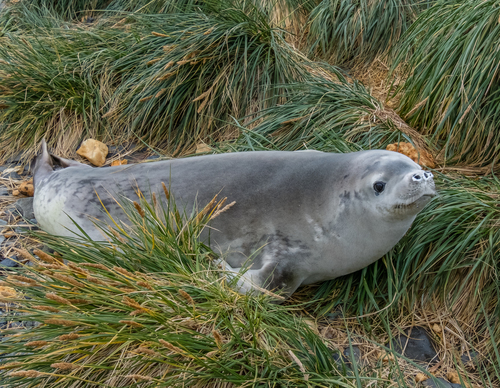
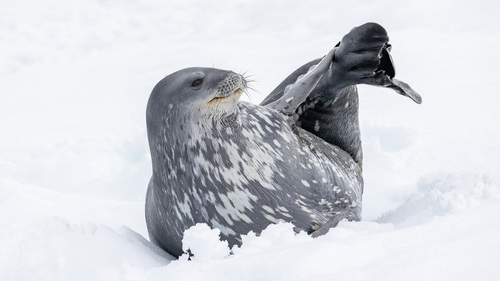
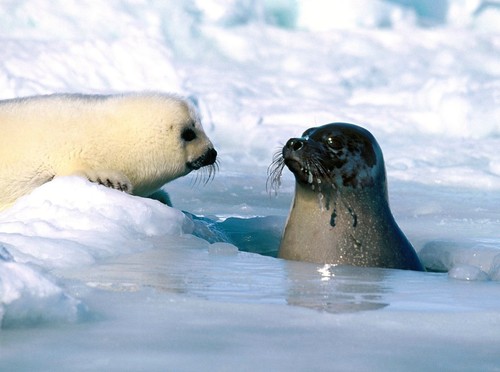
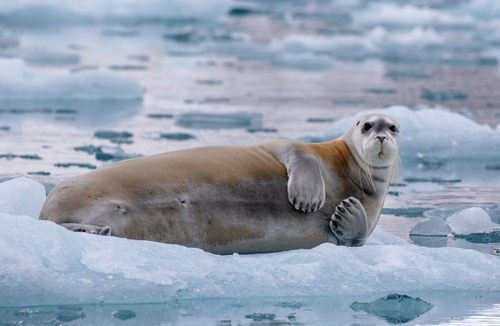
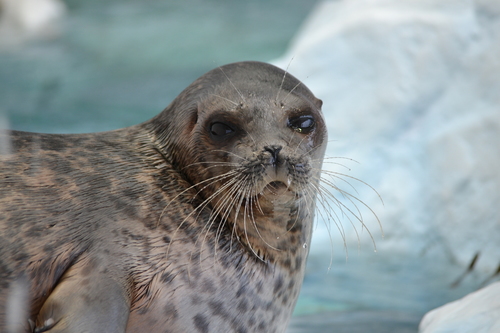
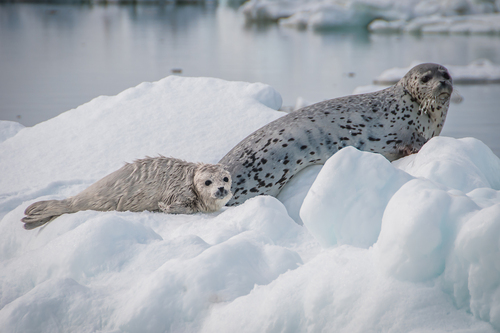
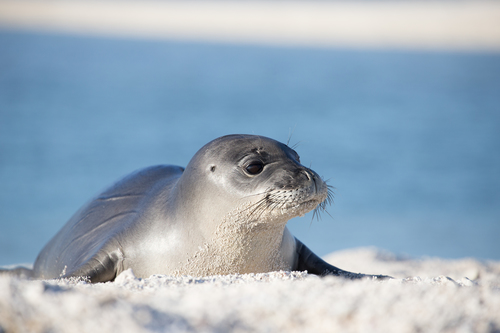
Neomonachus schauinslandi, commonly called the Hawaiian monk seal, can be distinguished from the distantly related harbor seal (Phoca vitulina) by its grey coat, white belly, and slender physique. This physique is ideal for hunting its prey: fish, lobster, octopus, and squid in deep water coral beds. When it is not hunting and eating, it generally basks on the sandy beaches and volcanic rock of the Northwest Hawaiian Islands. The Hawaiian monk seal is a member of the family Phocidae, a group defined by the characteristic lack of external ears and inability to rotate hind flippers under the body. It has a relatively small, flat head with large black eyes, eight pairs of teeth, and a short snout with the nostril on top of the snout and vibrissae on each side. The nostrils are small vertical slits that close when the seal dives underwater. Its slender, torpedo-shaped body and hind flippers allow it to be a very agile swimmer. Adult males weigh 140 to 180 kilograms (300 to 400 pounds) and measure 2.1 metres (7 feet) in length, while adult females are on average slightly larger, at 180 to 270 kg (400 to 600 lb) and 2.4 m (8 ft) in length. Newborn monk seal pups average 14 to 18 kg (30 to 40 lb) and 1 m (40 in) in length. They nurse for approximately six weeks, growing considerably to reach a weight between 70 and 90 kg (150 and 200 lb) by weaning, while the mother loses up to 140 kg (300 lb). Like elephant seals, monk seals shed their hair and the outer layer of their skin in an annual catastrophic molt. During the most active 10-day period of the molt, Hawaiian monk seals remain on the beach. Their hair is generally dark gray on the dorsal (back) side and lighter silver on the ventral (belly) side, and gradually changes color through the year with exposure to atmospheric conditions. Sunlight and seawater turn the dark gray fur brown and the light silver fur yellow-brown; long periods spent in the water can also promote algae growth, giving many seals a green tinge. Pups are born with black pelage, and molt to a silver-gray juvenile coat by the time they are weaned. Many Hawaiian monk seals have scars from shark attacks or entanglements with fishing gear. Their maximum life expectancy is 25 to 30 years. Most of the Hawaiian monk seal population is found around the Northwest Hawaiian Islands, but a small, growing population lives around the main Hawaiian Islands. These seals spend two-thirds of their time at sea. They spend much of their time foraging in deeper water outside of shallow lagoon reefs, at sub-photic depths of 300 metres (160 fathoms) or more. Hawaiian monk seals breed and haul out on sand, corals, and volcanic rock; sandy beaches are more commonly used for pupping. Because the Hawaiian Islands are separated by immense distances from any other land masses capable of supporting this species, its habitat is limited to the Hawaiian Islands. Hawaiian monk seals mate in the water during their breeding season, which runs between June and August. Females reach maturity at age four and give birth to one pup per year. The fetus develops over nine months, so birth occurs between March and June. At birth, pups typically weigh around 16 kg (35 lb) and measure about 1 m (3 ft 3 in) in length. In 2011, the National Marine Fisheries Service issued a controversial draft programmatic environmental impact statement intended to improve protections for the Hawaiian monk seal. The proposed plan includes expanded surveys using technologies such as remote cameras and unmanned, remotely operated aircraft, vaccination studies and vaccination programs, a de-worming program to improve juvenile survival, relocation of seals to the Northwestern Hawaiian Islands, diet supplements at feeding stations in the Northwestern Hawaiian Islands, tools to reduce undesirable contact between seals, people, and fishing gear in the main Hawaiian Islands, and chemical alteration of aggressive monk seal behavior.