About Neogalerucella calmariensis (Linnaeus, 1767)
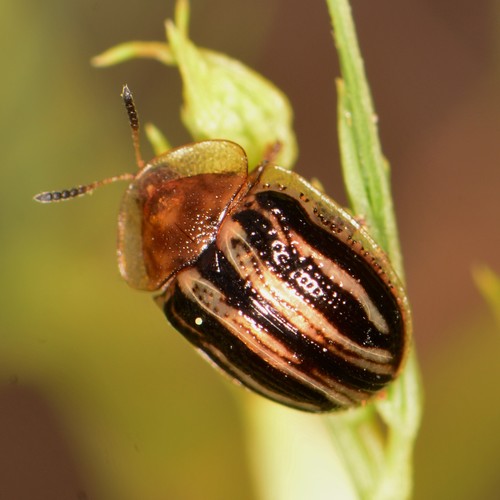
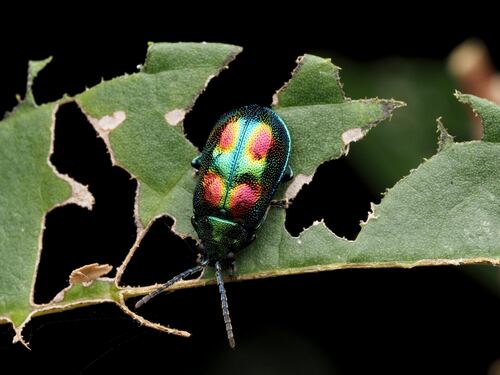
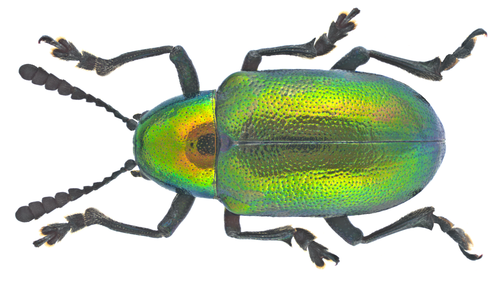
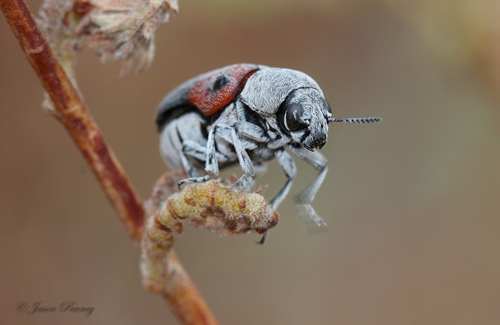
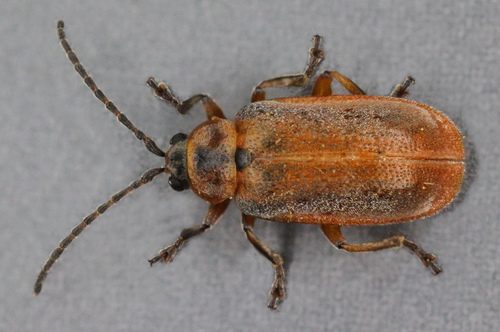
This species is commonly known as the black-margined loosestrife beetle, with the scientific name Neogalerucella calmariensis (Linnaeus, 1767). Adults have a cylindrical shape, are mid brown in color, and measure three to six millimetres long, with a width equal to half their length. When viewed from above, they often have two blackish lateral lines running down each side of the body. Their eggs are spherical, white, and usually covered with a layer of frass on top. Larvae are yellow, speckled with black, and look similar to small caterpillars. Black-margined loosestrife beetles are used for the biological control of purple loosestrife. Purple loosestrife is native to Europe, Asia, northwest Africa, and parts of Australia. A number of insect species are naturally associated with purple loosestrife in its native range, including the weevil Hylobius transversovittatus, and the leaf beetles Neogalerucella calmariensis and Neogalerucella pusilla. When purple loosestrife was introduced to North America, it had no native natural insect enemies to control its population, so it became an invasive rampant weed. It now forms large dense stands across the northeastern United States, southeastern Canada, and the American Midwest, where it crowds out native plant species and threatens local biodiversity. The black-margined loosestrife beetle and its close relative the golden loosestrife beetle (Neogalerucella pusilla) have been released for purple loosestrife control in more than 27 U.S. states and 6 Canadian provinces. Adults of both species have become well established in these regions and proven very effective at controlling the weed. The beetles have a strong ability to locate new stands of their host plant, and can find patches of purple loosestrife up to one kilometre away within just a few days of emerging as adults. Before these beetles were introduced to North America, researchers in Europe tested whether approximately 50 native North American plants would be vulnerable to feeding or use as hosts by the beetles. This test group included several plant species closely related to purple loosestrife. Only one native North American species, winged loosestrife (Lythrum alatum), was found to be susceptible. However, the beetles do not use winged loosestrife as a host when purple loosestrife is available.