About Nautichthys oculofasciatus (Girard, 1858)
General Body Plan
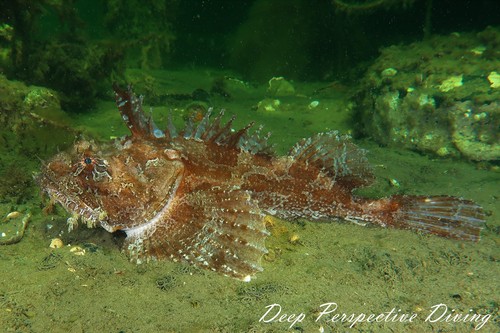
The sailfin sculpin (Nautichthys oculofasciatus) follows the typical cottoid body plan, and is best known for its conspicuous first dorsal fin, which is dominated by the first four spines of approximately equal length.
Body and Fin Coloration
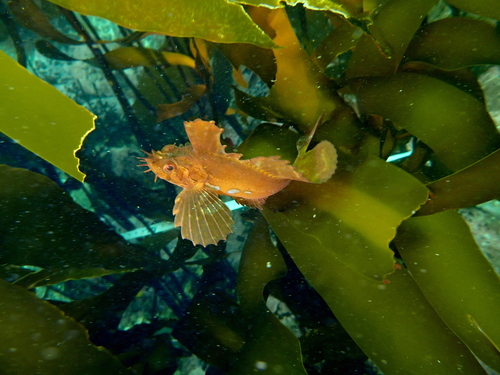
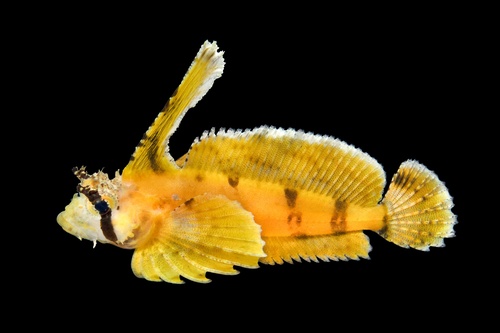
Its overall body color is variable, ranging from yellow-brown to yellow-gray; darker bands may be present on the body, while red flecks and diagonal streaks may appear on the fins. A distinct dark band runs through the eye.
Maximum Recorded Length
The maximum recorded total length for this species is 20 centimeters.
Skin Texture
Highly modified ctenoid scales give the sailfin sculpin's skin a velvety texture.
Knight Inlet Variant Range
As documented by FishBase, a variant of sailfin sculpin lives in Knight Inlet, British Columbia.
Knight Inlet Variant Fin Structure
In this variant, the 'sail' of the first dorsal fin looks 'frail' and 'more like a mast', and is dominated by the II, III, and I spines instead of the first four spines.
Swimming Behavior
The sailfin sculpin is a demersal species that swims along the seabed while holding its distinctive dorsal fin erect and extended forward.
Habitat Characteristics
N. oculofasciatus inhabits rocky coastal waters down to around 110 meters, in areas with abundant algae growth.
Activity and Shelter Behavior
It is nocturnally active, and during the day it shelters upside down against the roofs of crevices.
Diet
Its primary prey is zoobenthos, particularly crab and other crustaceans.
Spawning Migration
From late winter to early spring, sailfin sculpins migrate into shallower intertidal zones to spawn.
Egg Mass Traits
The species' egg masses are orange and adhere to the seabed.
Sexual Maturity Timeline
Individuals reach sexual maturity after one year.