About Natrix natrix (Linnaeus, 1758)
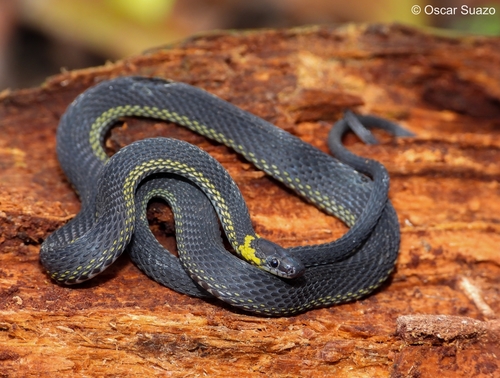
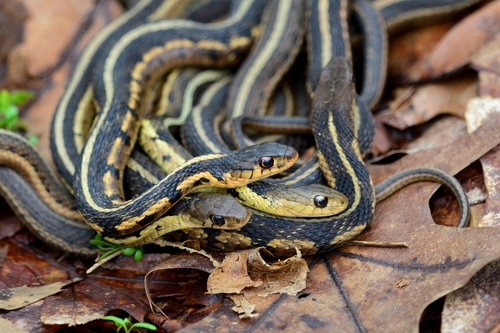
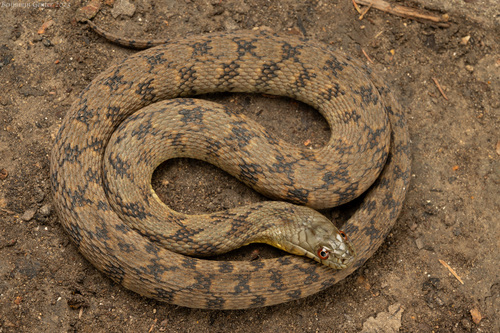
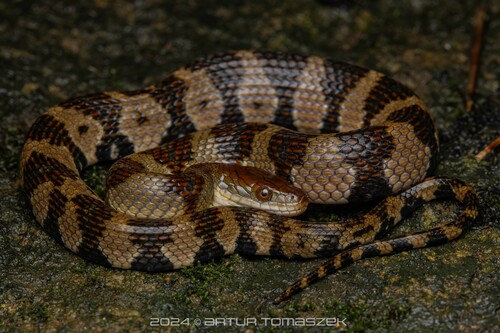
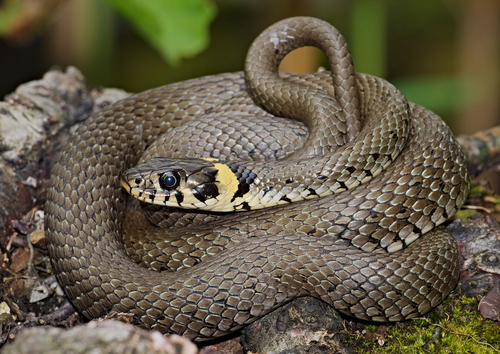
Grass snakes, scientifically Natrix natrix, are typically dark green or brown, with a distinctive yellow or white collar behind the head that gives them the alternative common name 'ringed snake'. Their base colour can range anywhere from grey to black; darker colouring is more common in colder regions, a pattern thought to come from the thermal advantages that dark pigmentation provides. The underside is whitish with irregular black markings, which are a helpful feature for identifying the species in the field. Adult grass snakes can reach 1 metre (3 feet 3 inches) or more in total length. The species is widely distributed across mainland Europe, ranging from central Scandinavia down to southern Italy. It is also present in the Middle East and northwestern Africa. Populations that were previously classified as the subspecies N. n. helvetica in Britain have since been reclassified as the separate barred grass snake Natrix helvetica, and any current records of Natrix natrix in Britain are thought to refer to imported individuals. Grass snakes are strong swimmers and are most often found near freshwater bodies. However, research shows that individual grass snakes do not always need constant access to water over the whole active season. Their preferred habitats are open woodland and edge habitats, including field margins and woodland borders. These areas provide enough shelter while also offering plenty of opportunities for thermoregulation through basking. Pond edges are also a favoured habitat, and the higher chance of spotting this elusive species in these locations likely explains why the species is so often associated with ponds and waterways. Like most reptiles, grass snakes depend on suitable thermal conditions, and need to overwinter in areas that do not freeze. For this reason, they typically spend the winter underground, where temperatures stay relatively stable. As spring comes, male grass snakes emerge from overwintering first, and spend most of the day basking to raise their body temperature and boost their metabolism. This is likely a strategy to maximize sperm production, because males mate with females as soon as females emerge, up to two weeks after males in April, or even earlier if environmental temperatures are warm enough. Females lay batches of 8 to 40 leathery eggs between June and July. Eggs hatch after approximately 10 weeks. To develop and hatch successfully, eggs need a minimum temperature of 21 °C (70 °F), and prefer 28 °C (82 °F) with high humidity. Females prefer to lay eggs in piles of rotting vegetation, such as compost heaps. Hatchlings measure around 18 centimetres (7 inches) long when they hatch and are fully independent immediately.