About Narcissus triandrus L.
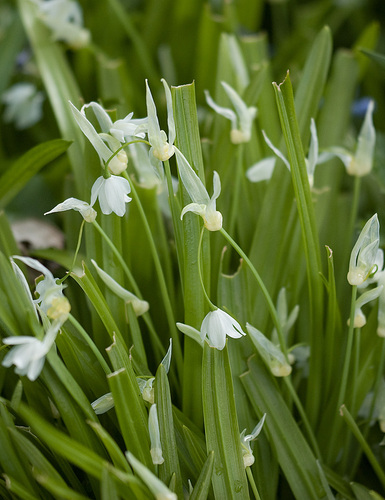
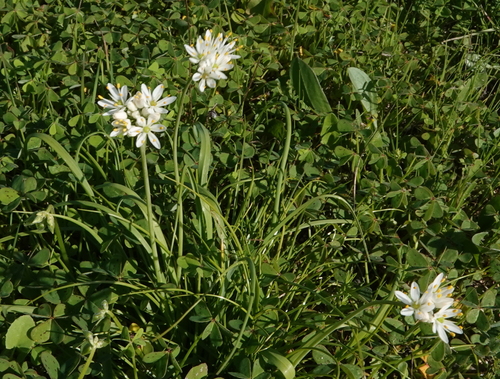
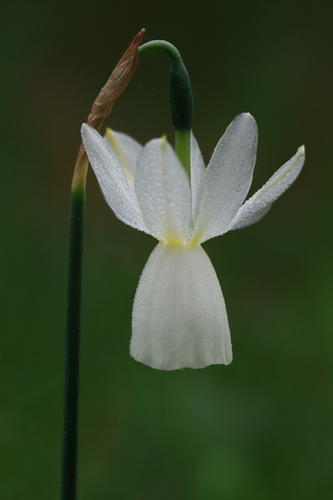
Narcissus triandrus L. is a bulbous perennial plant. This species has small, dark-colored bulbs that remain dormant in soil for most of the year, emerging in spring. A single bulb typically produces two leaves; each leaf can grow to 20 cm (7.9 in) long and 4–5 mm wide. The leaves are keeled, have a striated surface, and are sometimes coiled at the tip. Stems of this species reach 30 cm (12 in) in height, are thick, tubular, and have an almost waxy outer surface. Stems can hold between one and six cup-shaped flowers, which are either milk white or pale yellow.
Narcissus triandrus is native to France, Spain, and Portugal, where it grows in woodlands, scrubland, and exposed mountain habitats on acidic soils. It has been recorded growing in scrublands, mesophilic grasslands, sandy soils, and some rocky areas. Within Europe, it occurs on the Iberian peninsula, in the Iberian and Aracena Mountains, the Baetic and Penibaetic mountain systems, and the Serra de Monchique.
Flower size increases from southeast to northwest across its range, a change that correlates with overall plant size. This pattern likely reflects a rainfall gradient, from the hot Mediterranean climate of the southeast to the cooler, wetter Atlantic climate of the northwest. Changes in flower size also correspond to differences in pollinator fauna: Anthophora species are the dominant pollinators in southern populations, while larger-bodied Bombus species are dominant in the north. Self-pollination in Narcissus triandrus produces significantly lower seed yields than cross-pollination.
Though not a very popular daffodil species, Narcissus triandrus has similar care and blooming requirements to other daffodils. It is a low-maintenance plant that grows best in full sun or partial shade, with moderate watering — soil should be watered until damp, left to dry completely, then watered lightly again. The species is tolerant of rabbits, deer, and drought. Its resistance to disease and pests comes from its high content of alkaloids and lycorine. It flowers in late spring, from April to May. When planting, it is best positioned above summer-flowering bulbs and below early-spring bloomers. It is recommended to plant or pot this species in soft, well-drained soil in late fall. If planted at a depth two to three times the original length of the bulb, it will retain enough moisture to survive the winter. While Narcissus triandrus can tolerate shady areas, it grows best when placed in full sun or a location that receives sun for most of the day, as its flowers prefer to face and receive as much sunlight as possible.