About Nannotrigona testaceicornis (Lepeletier, 1836)
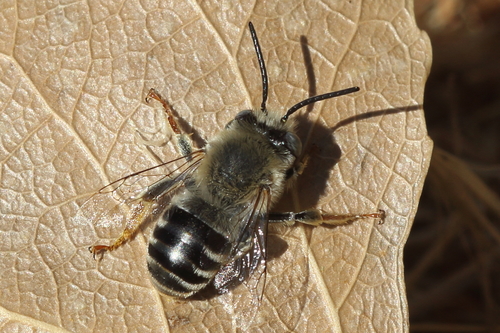
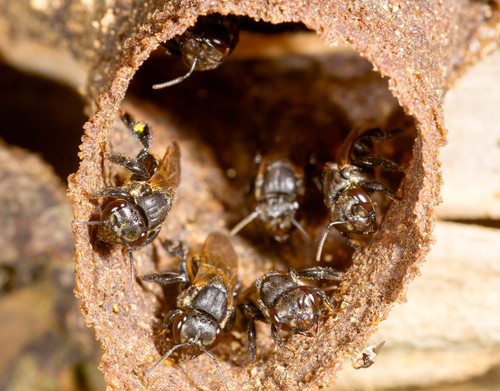
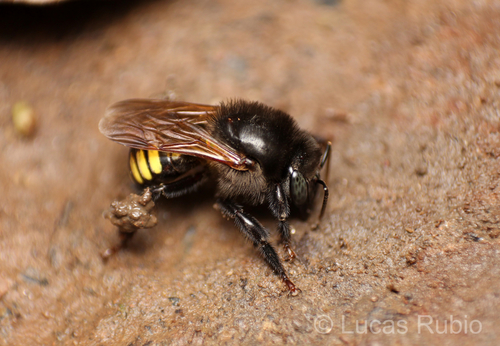
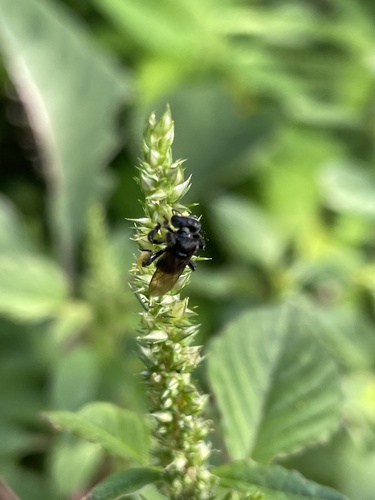
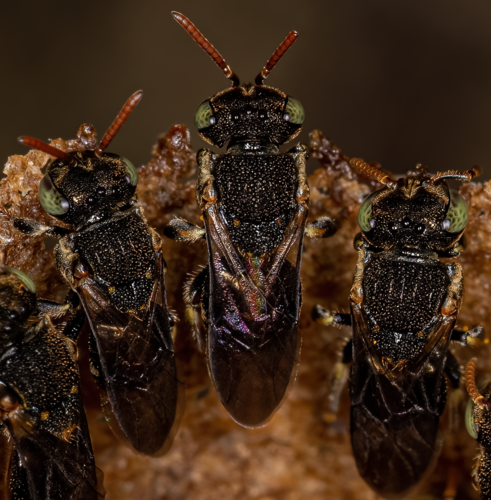
Nannotrigona testaceicornis bees are black, and typically have grey hairs, with a coarse, wrinkled thorax. Like other species in the genus Nannotrigona, they measure about 3 to 5 millimeters in length. There is extensive genetic variation within this species, which causes variation in wing venation. Colonies of this species contain approximately 2000 to 3000 individual bees. Nests are built inside tree cavities or artificial sites, and brood cells are arranged in combs. For such small bees, nest entrances are quite large, and workers usually line the entrance facing outward. This differs from the entrances of many other small Meliponini, which are small enough to be blocked by just one or a few workers. Nannotrigona testaceicornis is a neotropical eusocial bee with a broad geographic distribution, found primarily across Brazil. It can live in many different biomes, including urban areas. This ability to occupy varied habitats means different genotypes of the species can develop to match local biome conditions, which is most visible in the species' wing venation patterns. Because N. testaceicornis regularly occupies urban areas, it can live in both self-made and artificial hives. Most stingless bees build nests in pre-existing cavities using a range of different materials. N. testaceicornis frequently uses artificial cavities from human constructions to build its nests. The regular presence of N. testaceicornis in human-altered environments creates competition for nesting sites, which leads to more frequent aggressive interactions between different colonies of this species.