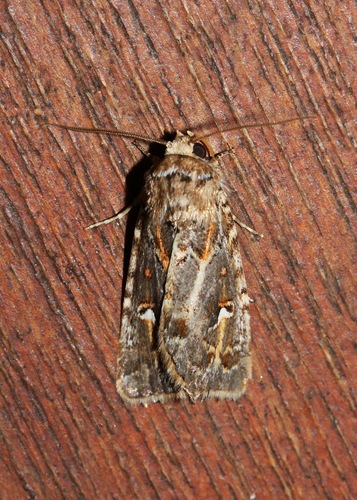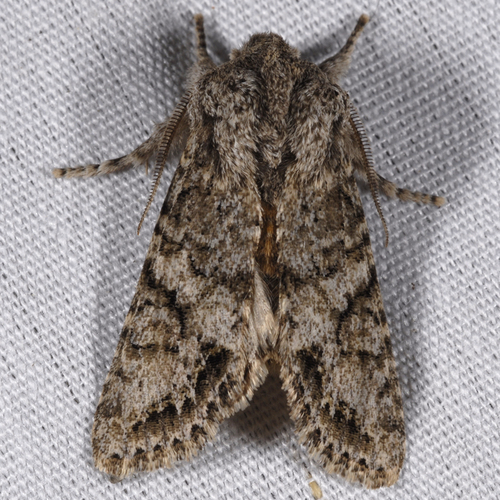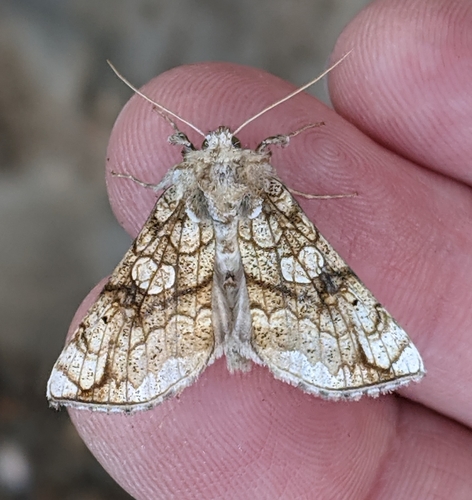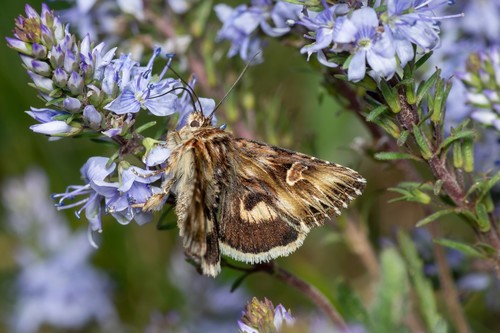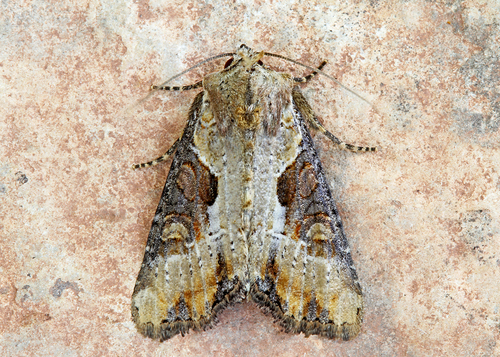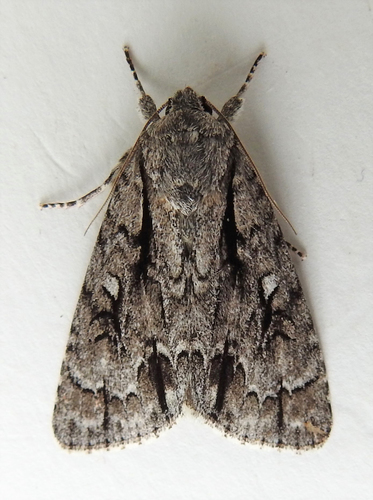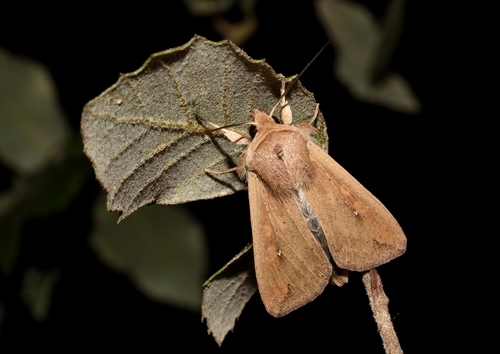
About Mythimna unipuncta (Haworth, 1809)
Mythimna unipuncta, commonly called the true armyworm moth, white-speck moth, common armyworm, or rice armyworm, is a moth species belonging to the family Noctuidae. It was first formally described by Adrian Hardy Haworth in 1809. This species is found across most of North America south of the Arctic, and also occurs in parts of South America, Europe, Africa, and Asia. Though it is thought to have originated in the Neotropical realm, it has been introduced to other regions, where it is often classified as an agricultural pest. The common name "armyworm" refers to the behavior of caterpillars of this species: they move in large massed lines from field to field, much like an army, while damaging crops along the way. The true armyworm follows a distinct migration pattern, traveling north in spring and south in fall to ensure mating takes place in a summer environment that is favorable for the species. As it progresses through its full life cycle of egg, larva, pupa, and adult, the species must avoid attacks from predatory bugs, birds, wasp and fly parasitoids, as well as infection from bacterial and fungal diseases. True armyworms are polygamous insects; females release sex pheromones and mate with multiple males. The production and release of these pheromones are affected by temperature, photoperiod, and juvenile hormone. Hearing is an important sense for the true armyworm, required for both successful mating and evading predation by bats. This species has a broad global geographic range, including the Americas, southern Europe, central Africa, and western Asia. In North America, it inhabits areas east of the Rocky Mountains, as well as parts of northern Canada. A single population can produce two to three generations per year, and each full generation takes between 30 and 50 days to complete.