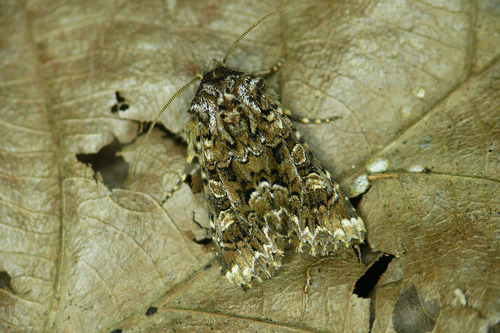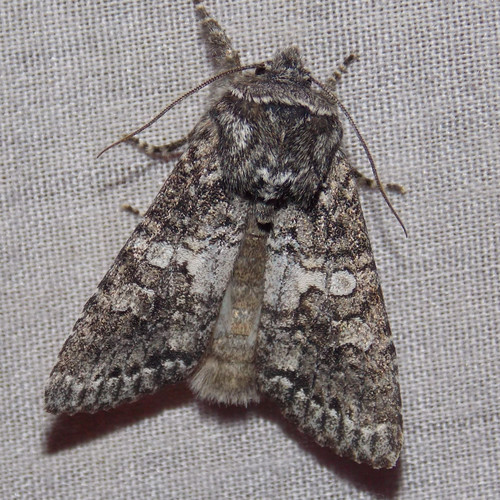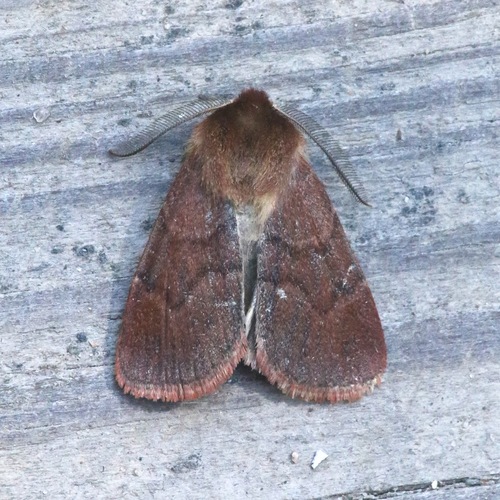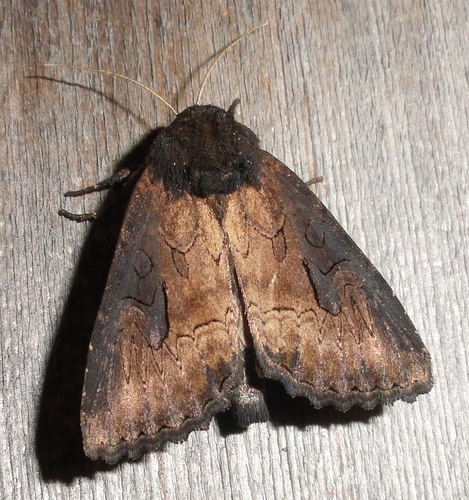
About Mythimna conigera (Denis & Schiffermüller), 1775
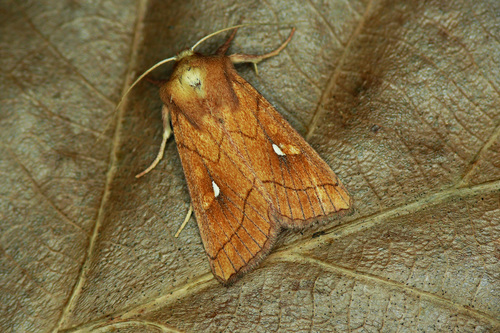
Mythimna conigera was first described by Denis & Schiffermüller in 1775. Technical description and variation: The wingspan of this moth species is 30–35 mm. The forewing is smooth pale ochreous suffused with brown, except along the costa; it is also described as pale fulvous suffused with darker shading. The lines on the forewing are fine and brown; the inner line is angled on the submedian fold, while the outer line is sinuate and runs nearly parallel to the outer margin. The orbicular and reniform stigmata are pale and indistinct, with the exception of the lower lobe of the reniform, which is marked by a snow-white spot, and is often surrounded by a grey cloud. The hindwing is pale rufous, and becomes darker towards the termen. The melanic form suffusa Tutt lacks any yellow tint, and occurs in North England and Western Ireland. The larva is dull yellow brown; the dorsal line is white with dark edges; the subdorsal line is black; the lateral lines are white flecked with red, with a broad brown stripe running beneath them and above the black spiracles. Additional information can be found in Hacker et al. Distribution: This species occurs across Europe, and has a disjunct population in the Sind Valley, Kashmir, which is classified as the subspecies angulifera (Moore, 1881). It is also found east across the Palearctic, from Asia Minor, Armenia, and Central Asia through Siberia to Japan. Habitat: These moths live in open habitats, including both wet and dry meadows, in montane and subalpine areas.