About Myrtillocactus geometrizans (Mart. ex Pfeiff.) Console
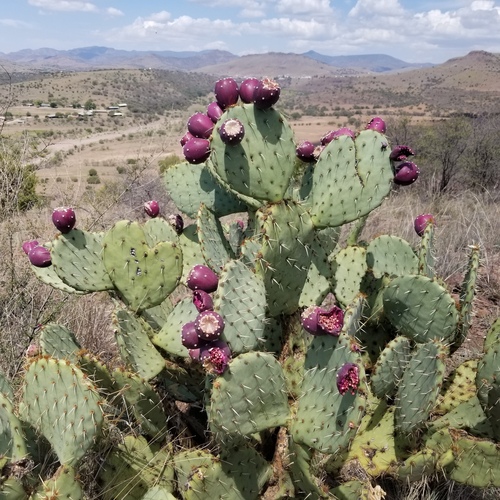
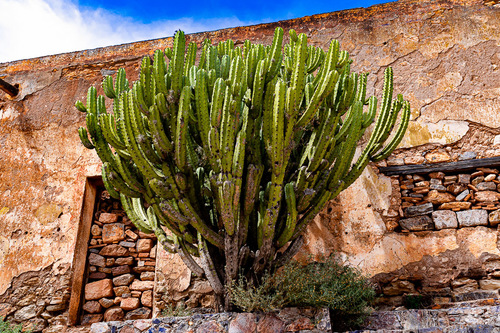
Myrtillocactus geometrizans (Mart. ex Pfeiff.) Console is a large shrubby cactus that grows 4–5 meters tall. Mature plants develop candelabra-like branching. Individual stems measure 6–10 cm in diameter, and typically have five ribs, occasionally six. Areoles on the stems are spaced 1.5–3 cm apart. Its flowers are creamy white, 2–2.5 cm in diameter, and last less than one day. The fruit is an edible dark purple berry 1–2 cm in diameter, which superficially resembles the fruit of Vaccinium myrtillus, also known as bilberry or whortleberry. Both the scientific name and common English name of this cactus come from this resemblance. This species is popular in cultivation; young plants typically stay unbranched for many years. Its edible fruit is harvested and sold for consumption in Mexico. Bilberry cactus grows quickly, so it is often used as grafting stock. Under favorable growing conditions, it can reach heights of up to 15 feet. A Japanese cultivar called fukurokuryuzinboku (福禄竜神木), commonly nicknamed "titty cactus" or "breast cactus," has unusually plump ribs shaped like human breasts. The name fukurokuryuzinboku breaks down roughly to fortune (fuku), fief or happy (roku), dragon (ryu), Shinto god or spirit (jin), and tree (boku). It is named after Fukurokuju and Ryujin, two of the Seven Lucky Gods in Japanese mythology. The glorp cultivar, discovered in 2020, has an unusual alien-looking stem with mutated ribs. This is a very popular clone of Myrtillocactus geometrizans that has been mass propagated through grafting, and this cultivar also commonly develops fasciated (crested) growth.