About Myrtaceae
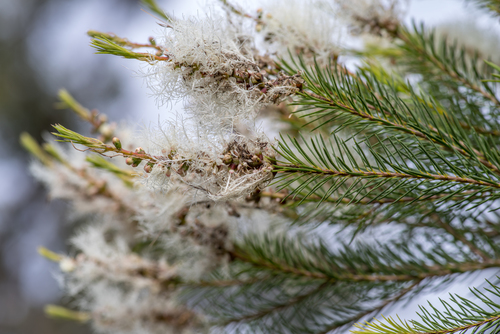
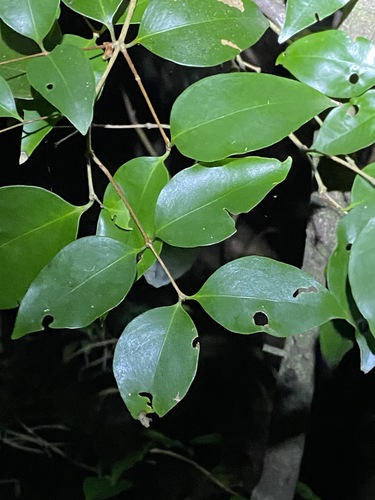
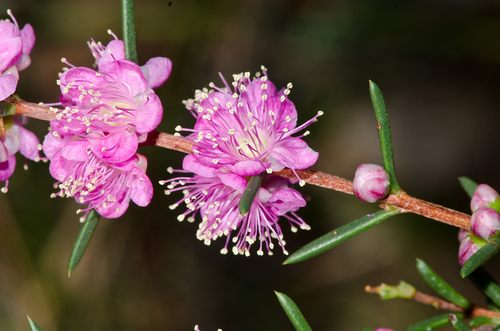
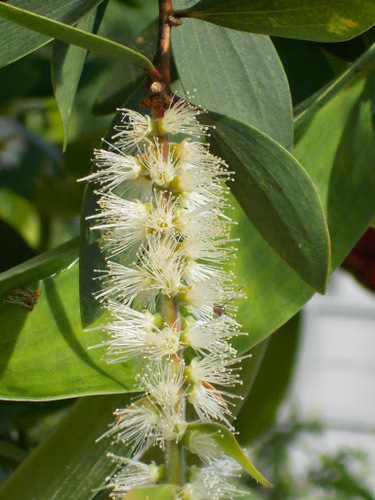
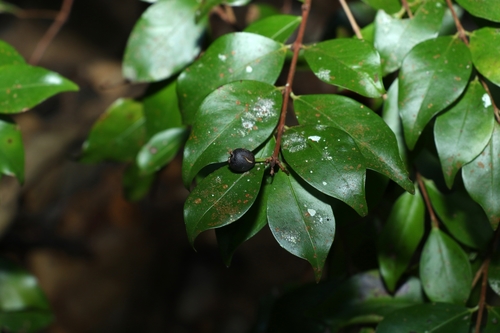
Myrtaceae, the myrtle family, is a family of dicotyledonous plants classified in the order Myrtales. Notable members of this plant family include myrtle, pōhutukawa, bay rum tree, clove, guava, acca (feijoa), allspice, and eucalyptus. All species in this family are woody, produce essential oils, and have flower parts that grow in multiples of four or five. The leaves of Myrtaceae species are evergreen, arranged in an alternate to mostly opposite pattern, are simple in structure, and usually have an entire margin, meaning they do not have toothed edges. Flowers in this family typically have five petals, though petals are minute or missing in a number of genera. The stamens are usually very noticeable, brightly coloured, and numerous. Many species of stingless bees forage on Myrtaceae. This includes Melipona bicolor, which collects pollen from plants in this family. Some Australian stingless bee species, specifically Tetragonula hockingsi and T. carbonaria, collect resin from the mature seed pods of Corymbia torelliana. This collection leads to mellitochory, when seeds become stuck to the bees' corbiculae, and are sometimes successfully dispersed by colony members that remove the seeds. More often, the seeds become stuck inside hives or near hive entrances. This makes the interaction a minor nuisance for some beekeepers, as the seeds can take up a large amount of space. This phenomenon is currently only documented in eastern Australia, though it could potentially occur in other neighbouring countries where Corymbia species are native. Weevils belonging to the tribe Cryptoplini mostly use Myrtaceae as host plants. Their larvae are able to develop inside flower and fruit buds, or within galls, often galls that were already formed by other insects.