About Myrmecina graminicola (Latreille, 1802)
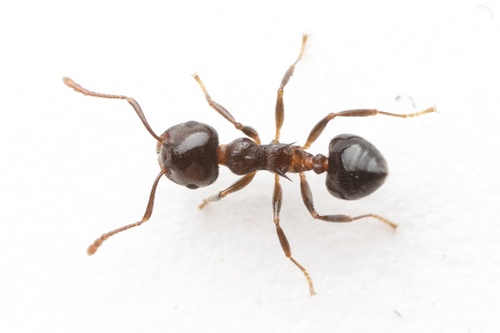
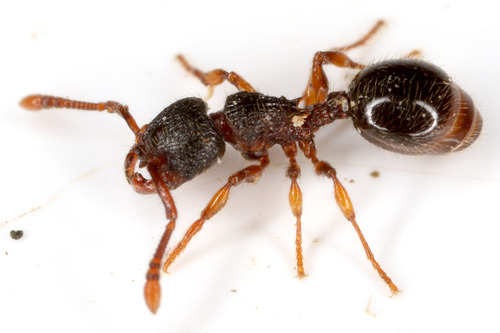
Myrmecina graminicola is a species of ant found across Northern Africa, Europe, Asia, and other parts of the Palearctic realm. Colonies of this species build nests in soil, under rocks, and within leaf litter. It was first described in 1802 by Pierre André Latreille, who originally placed it in the genus Formica. Myrmecina graminicola is not an aggressive species. When a worker ant encounters an intruder, it responds by playing dead, with its legs and antennae folded. Colonies of this ant contain fewer than 100 workers and a single queen. Before mating takes place, female ants release a pheromone that attracts males, and mating occurs just seconds after males are drawn to the pheromone. Ant colonies move by following the queen's pheromone trail. During their mating flights, male Myrmecina graminicola have been observed flying at high elevations, between 5 and 20 meters above the ground. This is an unusual behavior for a species that normally nests and forages close to the soil surface. Recent research has also found several unique physical characteristics in males of this species, including a small hook-shaped structure on the dorsum and a lack of spurs on the middle and hind legs. These traits help distinguish Myrmecina graminicola males from other species in the same genus.