About Myrica gale L.
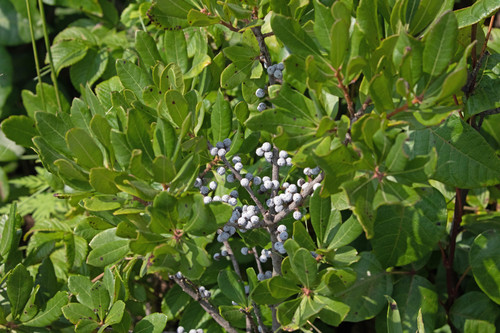
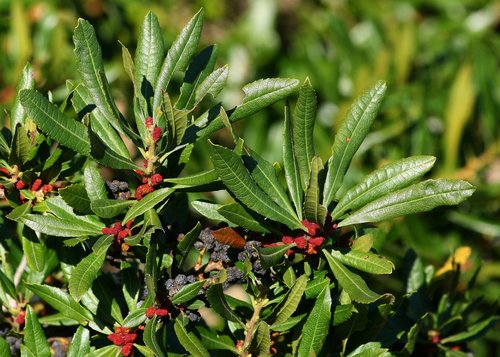
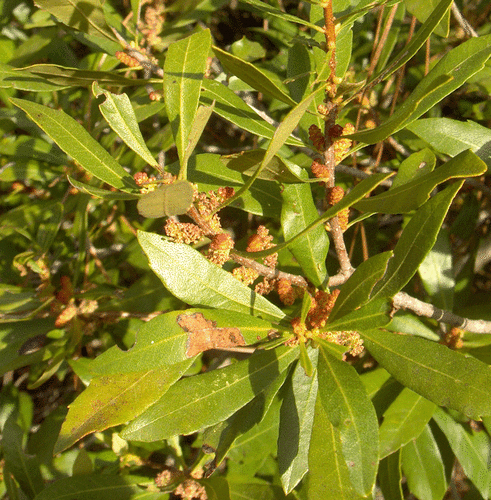
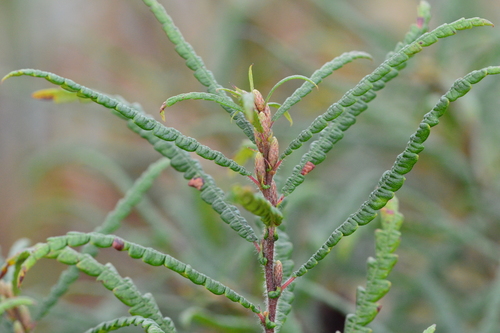
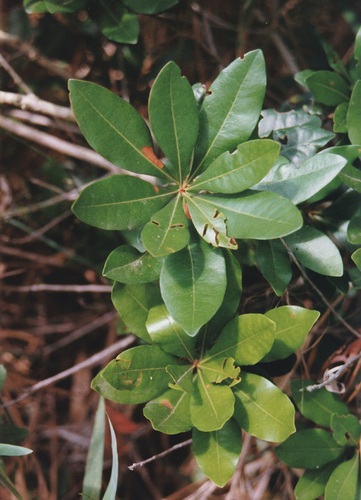
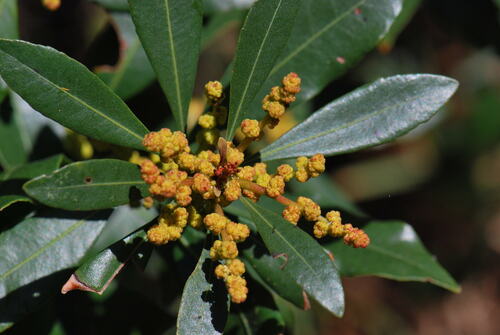
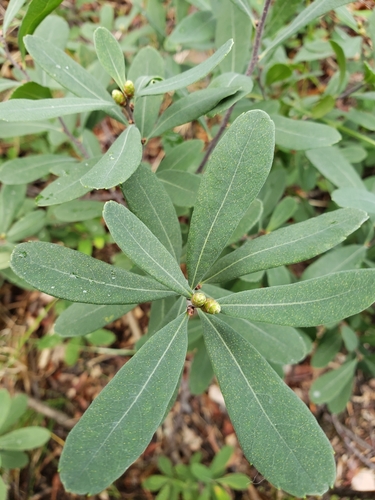
Myrica gale L. is an aromatic deciduous shrub that grows up to 2 metres (6+1⁄2 feet) tall, and often forms large, dense clonal colonies from root suckers. Its leaves are arranged in a spiral pattern, are simple, and have a glaucous grey-green colour. They measure 2–6 centimetres (3⁄4–2+1⁄4 inches) long, have an oblanceolate shape with a tapered base and a broader tip, and feature a crinkled or finely toothed margin. Flowering occurs in spring, before new leaves emerge. The flowers are catkins: male catkins are yellowish to orange-brown, while female catkins are red to purple. Plants are usually dioecious (carry male and female flowers on separate individuals), but are occasionally monoecious (carry both sexes on the same plant), and individual plants can change sex from one year to the next. The fruit produced is a small, waxy drupe. The main components of Myrica gale essential oils are 1,8-cineole, α-pinene, limonene, selina-3(7)-diene, and (E)-nerolidol. For essential oils extracted from leaves and flowers respectively, the main monoterpene hydrocarbon components are α-pinene (12.3%, 23.5%), p-cymene (12.8%, 4.9%), and limonene (11.0%, 5.6%). The main oxygenated monoterpene component is 1,8-cineole (28.6%, 44.2%). In ecological terms, birds eat small quantities of Myrica gale. It is a favourite food of beavers, and provides high-quality habitat for salmon and water birds. The foliage of Myrica gale has a sweet resinous scent, and it is a traditional insect repellent, used by campers to keep biting insects away from tents. It is also a traditional component of royal wedding bouquets, and is used for various purposes in perfumery and as a condiment. In Scotland, UK, it has traditionally been used to repel the Highland midge, and it is currently sold commercially as an insect repellent and as an ingredient in some soaps. Dried leaves and fruits have been used as a spice added to soups and stews, and as a flavouring for beer. Roots and bark are used as a source of yellow dye for calfskin and wool. Catkins and fruits are used as a source of wax for candle-making. Infusions made from leaves and fruits are used as an insecticide. Myrica gale has also been used in traditional medicine as a treatment for stomach and cardiac disorders. Its volatile oil contributes to the plant's resistance to fungal pathogens. Dried leaves can be used to make tea, and both the nutlets and leaves (either chopped or dried) can be used to make a seasoning. In northwestern Europe, including Germany, Belgium and the Netherlands, it was widely used in a mixture called gruit to flavour beer from the Middle Ages until the 16th century. It fell out of common use after hops replaced gruit herbs for political and economic reasons. In modern times, some brewers have returned to this historic method, and in Denmark and Sweden the plant is commonly used to prepare home-flavoured schnaps. In some native cultures in Eastern Canada, the plant has been used as a traditional remedy for stomach aches, fever, bronchial conditions, and liver problems. In 2007, plans were made to increase production of the plant in Scotland to produce essential oil for treating sensitive skin and acne. The plant has been listed as an abortifacient, so it should not be consumed by people who are pregnant or may become pregnant.