About Myrcianthes coquimbensis (Barnéoud) Landrum & Grifo
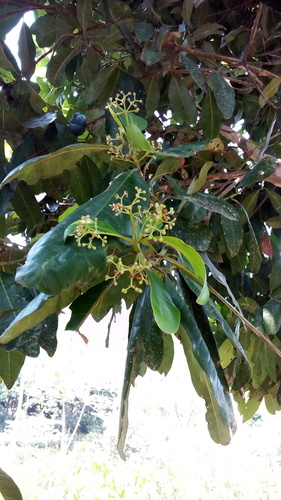
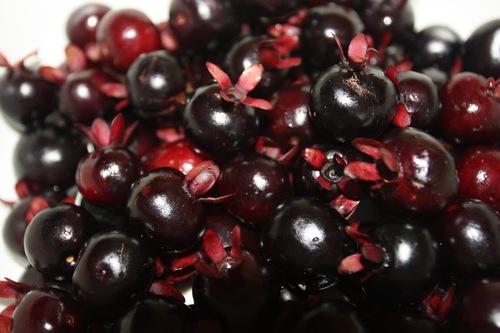
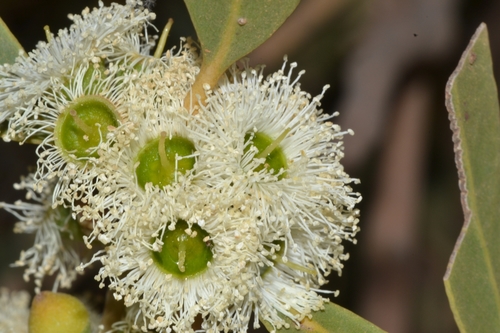
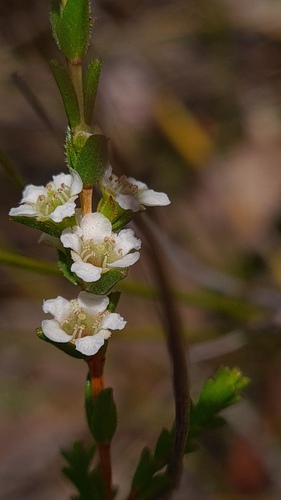
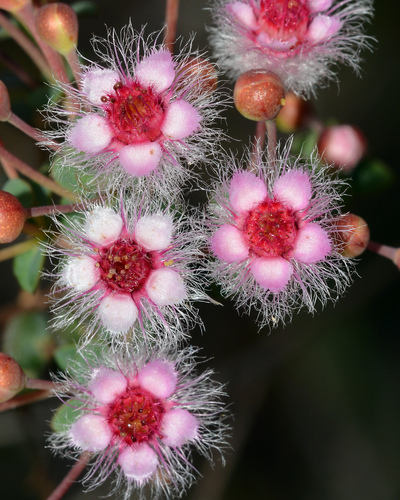
Myrcianthes coquimbensis is a small, dense, aromatic, rounded shrub that grows to around 1.5 metres (5 feet) tall. Its evergreen leaves have short stalks, are oval or elliptical in shape, and have smooth entire margins that are often rolled downward. The leaves are leathery, with bluntly rounded tips, and measure 1.5 to 2.5 cm (0.6 to 1.0 in) long and 1.2 to 1.8 cm (0.5 to 0.7 in) wide. Its leaf lateral veins run nearly perpendicular to the central leaf vein. The small flowers of this species grow either singly or in groups of three; in three-flowered groups, the central flower is stalkless (sessile), while the two side flowers have short stalks. Each flower has five white petals and a dense cluster of protruding stamens. The fruit is an edible fleshy berry, holding one or two seeds, and is topped by the persistent remains of the five sepals. The fruit measures 1.5 to 2 cm (0.6 to 0.8 in) in diameter and turns red when it is ripe.
Myrcianthes coquimbensis is endemic to Chile. Its range covers approximately 83 kilometres (52 miles) along the coast of Elqui Province, in Chile's Coquimbo region. It most often grows on coastal rocks on slopes that are almost constantly kept moist by mist blown in from the Pacific Ocean, though some individual plants grow in other locations. This species is frequently found growing alongside a plant community that includes the shrubs and plants Bridgesia incisifolia, Oxalis gigantea, Heliotropium stenophyllum, Bahia ambrosioides, and Polyachyrus poeppigii. This shrub is classified as endangered due to habitat loss, its failure to produce flowers and fruit, and the resulting lack of recruitment of young plants.