About Myiopagis caniceps (Swainson, 1835)
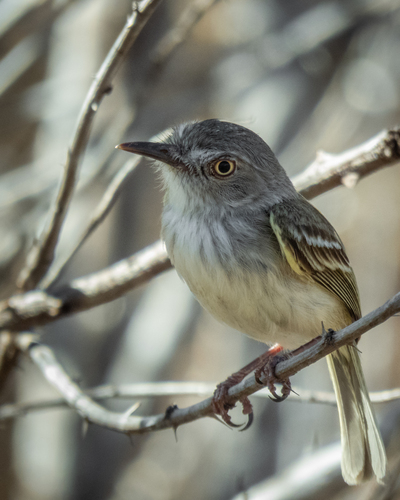
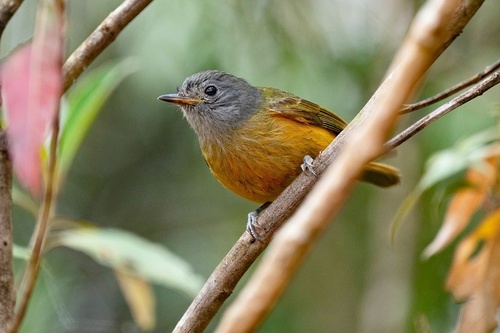
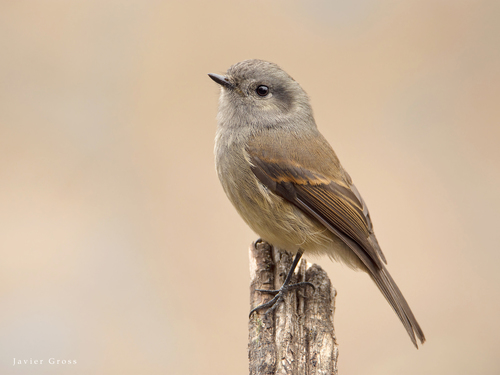
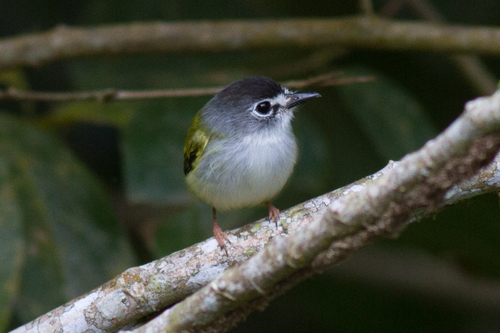
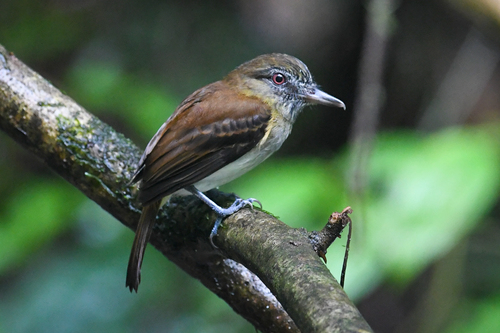
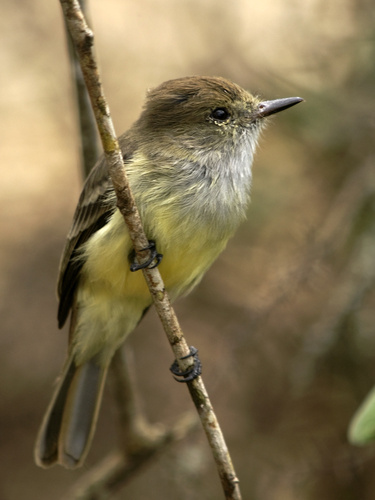
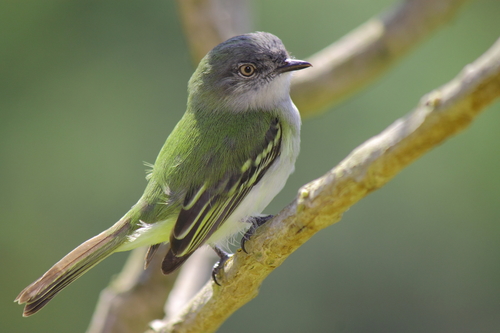
Myiopagis caniceps, commonly called the grey-headed elaenia, measures 12 to 14 cm (4.7 to 5.5 in) in length and weighs 9.5 to 17 g (0.34 to 0.60 oz). Adult males have a medium gray crown with a partially concealed white stripe along its center. They have an indistinct whitish loral spot and a grizzled whitish lower face. Their upperparts are olive gray, and their wings are black with white edges on the inner flight feathers and white tips on the coverts; these white tips form two bars on the closed wing. Their tail is grayish. Their throat is white, breast is pale gray, and belly is grayish white. Adult females are smaller than males. They have a medium gray crown and nape with a pale yellow stripe on the crown. Their upperparts are bright greenish olive, and their wings are black with pale to bright yellow markings in the areas where males have white markings. Their tail is grayish. Their throat and breast are pale gray, and their belly is grayish white with a pale yellow wash. Both sexes have a brown iris; males additionally have a white ring around the iris. Both sexes have a short black bill with a lighter base to the mandible, and grayish black to black legs and feet. The grey-headed elaenia is distributed across northeastern, southern, and southeastern Brazil, ranging from Maranhão to Ceará, south to northern Rio Grande do Sul. Its range extends south and west from this area through southern Bolivia into extreme northwestern Argentina, and also into eastern Paraguay and Misiones Province in northeastern Argentina. It lives in the canopy of multiple types of forested landscapes, including dry forest, gallery forest, cerradão, and dry semi-deciduous woodlands. It has also been recorded in regrowing vegetation within Eucalyptus plantations. In Brazil, it occurs at elevations from sea level up to 1,200 m (3,900 ft).