About Mycalesis anynana Butler, 1879
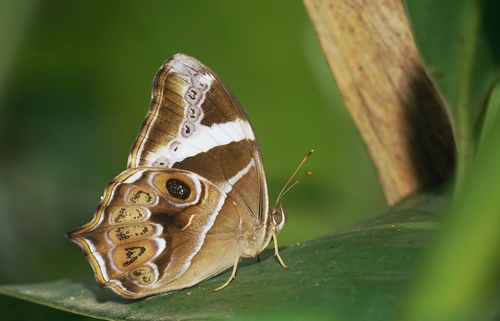
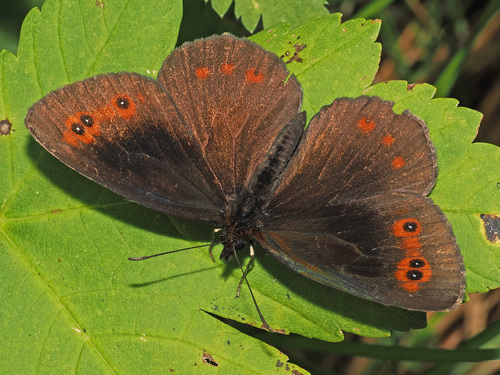
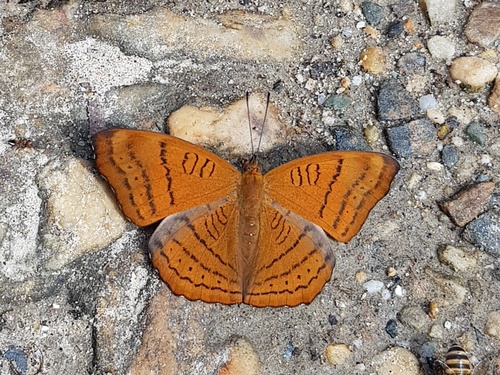
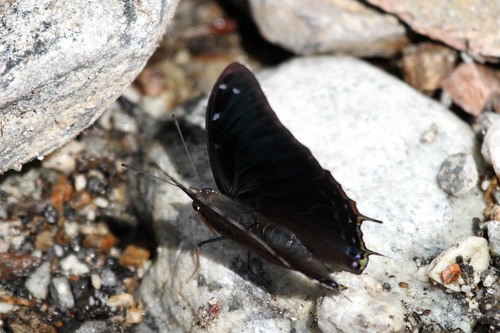
Mycalesis anynana, commonly called the squinting bush brown, is a small brown butterfly. Males have a wingspan of 35–40 mm, while females have a wingspan of 45–49 mm. Males bear specialized sexual traits called androconia on their wings, which release pheromones during courtship. This butterfly is characterized by unusually short front legs and rather non-descript brown wings; however, wet-season individuals have several large eyespots on their wings. There are two full generations per year: the wet-season form flies in spring and summer, and the dry-season form flies in autumn and winter. This is typically a woodland butterfly, found flying close to the ground. It is primarily distributed across eastern Africa, mainly occurring in Uganda, Ethiopia, Kenya, Tanzania, Mozambique, and Zimbabwe. In the caterpillar larval stage, it uses multiple grass species and a few Cyperus species as host food plants, with most larval host plants belonging to the grass family Poaceae. Adult butterflies feed on fallen fruit located on the ground, instead of nectar, due to fruit availability in their habitat. Fruit-feeding butterfly species are recorded to have the longest lifespans, and fruit-feeding individuals of this species have been found to produce more robust offspring. In the wild, the squinting bush brown can live up to six months, and reaches sexual maturity around two weeks after emerging.