About Muscisaxicola cinereus Philippi & Landbeck, 1864
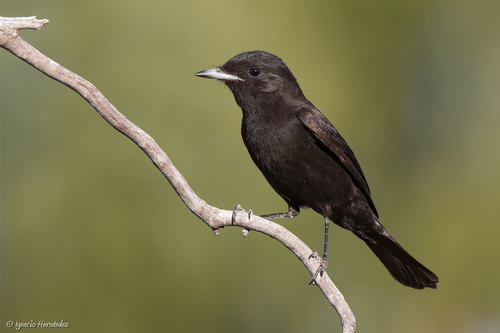
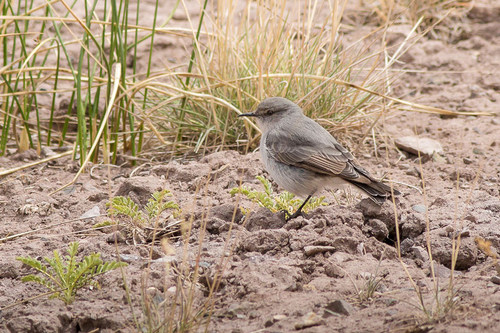
The cinereous ground tyrant, scientific name Muscisaxicola cinereus Philippi & Landbeck, 1864, measures 15.5 to 16.5 cm (6.1 to 6.5 in) in length. Both its two subspecies and males and females of the species share the same gray plumage tones; the name "cinereous" means ash-colored. Subspecies M. c. argentinus is slightly larger than the nominate subspecies. Adults have a grayish brown crown, dusky lores, and a thin white supercilium that extends to above the eye. Their nape and back are grayish brown. Their wings are a duskier grayish brown, with paler edges on some of the coverts. Their tail is blackish, with thin white edges on the outermost feathers. Their underparts are mostly grayish white, with a somewhat whiter belly. They have a dark brown iris, a black bill, and black legs and feet. The cinereous ground tyrant ranges from the Pasco and northern Lima departments of central Peru, south through western Bolivia and northwestern Argentina to the Maule Region of central Chile. Within this overall range, subspecies M. c. argentinus occurs in Argentina between Jujuy and Catamarca provinces. The species primarily inhabits puna grassland, and is also found in montane scrublands and rocky pastures located near water. During the non-breeding season, it favors dry rocky areas. Across its full distribution, it occurs at elevations between 2,500 and 5,000 m (8,200 and 16,400 ft); within Peru, it is only found between 4,000 and 4,700 m (13,100 and 15,400 ft).