About Muscicapa muttui (E.L.Layard, 1854)
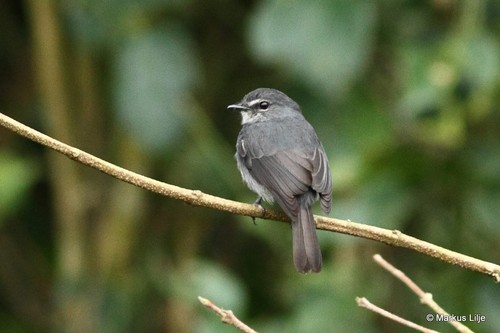
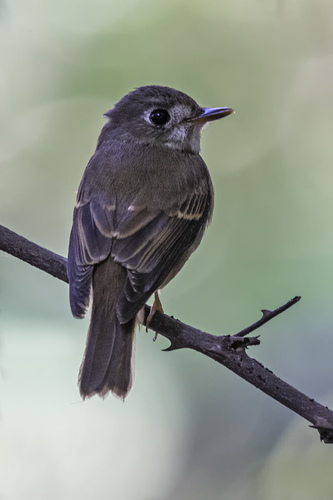
The brown-breasted flycatcher, with the scientific name Muscicapa muttui (E.L.Layard, 1854), measures 13–14 cm in length and weighs 10–14 g. Its entire upper body is olive brown, with some darker feather shafts. The upper tail coverts are a brighter rufous shade, and this rufous colour also appears on the edges of the bird’s flight feathers. Rufous colouring is present on the outer webs of the tail feathers. The bird has pale lores and a clearly visible eye ring. Its chin and throat are white, while its breast and the sides of its body are pale brown. The area from the centre of the body to the vent is buffy white. Faint submoustachial stripes mark the edge of the pale chin, and the legs and lower mandible are pale flesh coloured. The most closely similar species is the Asian brown flycatcher, which can be distinguished by its black legs instead of pale legs. This species was named by Layard after Muttu, Layard’s servant who brought him the type specimen. While there is no ringing evidence to confirm this species’ migration patterns, it is currently thought that wintering populations in southern India and Sri Lanka migrate there from north-east India and northern Thailand. A subspecies called stötzneri, incorrectly spelled stotmani by E C Stuart Baker, was described from Szechwan by Hugo Weigold in 1922; this form falls within the known range of natural visible geographic variation for the species, and it is not generally recognized as a valid subspecies. The species’ typical call is a very faint tseet that can only be heard at close range, or a sequence of chi-chi-chi-chi notes that end in a low chit-chit.