About Murraya paniculata (L.) Jacq.
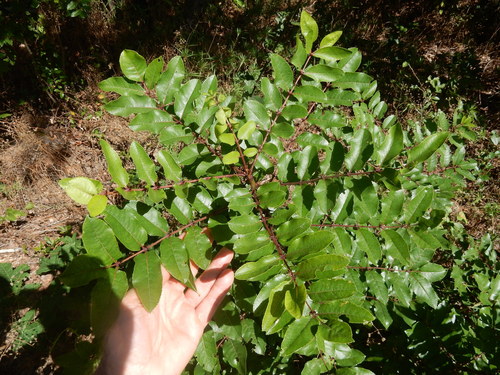
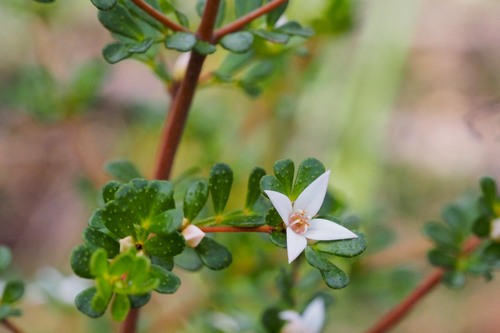
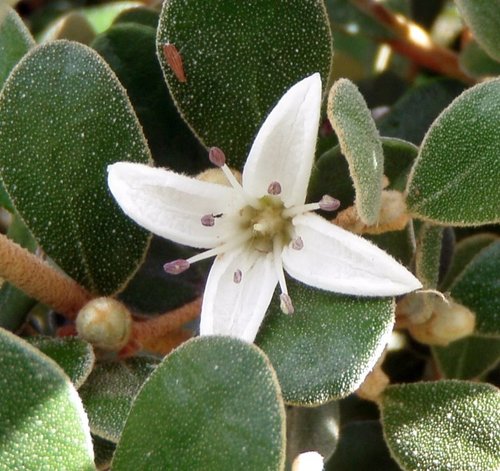
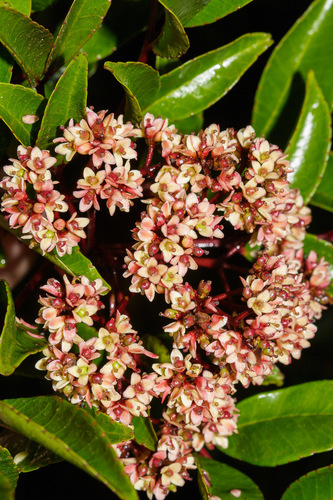
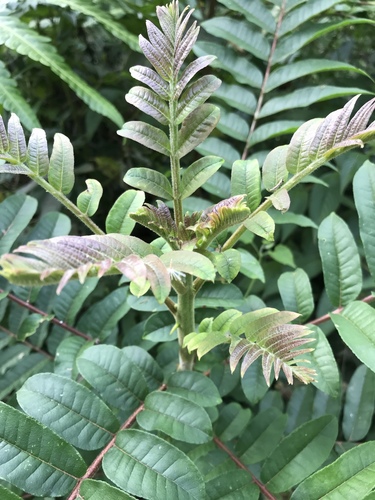
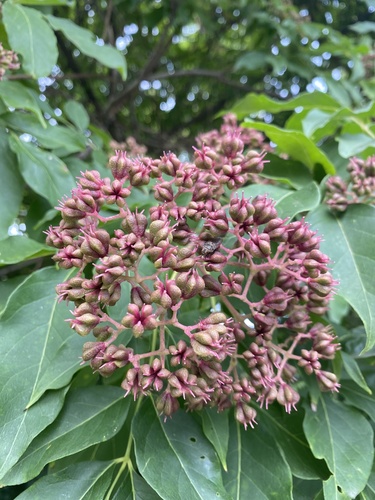
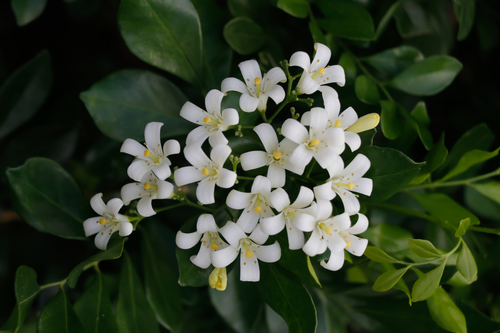
Murraya paniculata (L.) Jacq. is a tree that typically reaches 7 m (23 ft) in height, though it often flowers and produces fruit when growing as a shrub. It has smooth pale to whitish bark, and pinnate leaves up to 170 mm (6.7 in) long that hold up to seven leaflets. Leaflets are egg-shaped, elliptical, or rhombus-shaped; they are glossy green, glabrous, 25–100 mm (0.98–3.94 in) long and 12–50 mm (0.47–1.97 in) wide, and grow on a petiolule 2–6 mm (0.079–0.236 in) long. Its flowers are fragrant and arranged in loose groups, each borne on a 1–1.5 mm (0.039–0.059 in) long pedicel. It has five (sometimes four) sepals around 1 mm (0.039 in) long, and five (sometimes four) white or cream-coloured petals 13–18 mm (0.51–0.71 in) long. The fruit is an oval, glabrous, orange-red berry 12–14 mm (0.47–0.55 in) long that contains densely hairy seeds. This species grows in rainforest, and is often an understorey shrub in vine thickets including those behind beaches. It is native to South and Southeast Asia, China, and Australasia. Its native distribution ranges from Pakistan through India, Sri Lanka, and southern China to Taiwan, the Philippines—where it is called kamuníng—the Ryūkyū Islands, and the Mariana Islands, and extends south through Malaysia and Indonesia to New Guinea and parts of Australia. In Australia, it is native to the Kimberley region of Western Australia, northern parts of the Northern Territory, and parts of Queensland. The species has become naturalised in other locations, and is sometimes an invasive weed, including on many Pacific islands. In Queensland, it is considered distinct from the cultivated cultivar Murraya paniculata 'Exotica', which is ranked as one of the most invasive plant species in southeast Queensland. In Australia, flowering occurs from June to March, and fruits ripen between January and October. In the northern hemisphere, flowering occurs from April to October, and fruits ripen from April to February. This species is one of the preferred host plants for Diaphorina citri, the citrus psyllid—a citrus pest that acts as the vector for Citrus greening disease. Murraya paniculata is cultivated as an ornamental tree or hedge, valued for its hardiness and wide tolerance of different soil types; it can grow in alkaline, clayey, sandy, acidic, and loamy soils, and is well-suited for larger hedges. The plant flowers throughout the year, producing small clusters of fragrant flowers that attract bees, while its fruits attract small frugivorous birds.