About Muhlenbergia frondosa (Poir.) Fernald
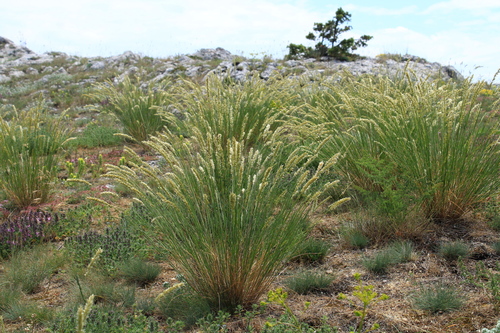
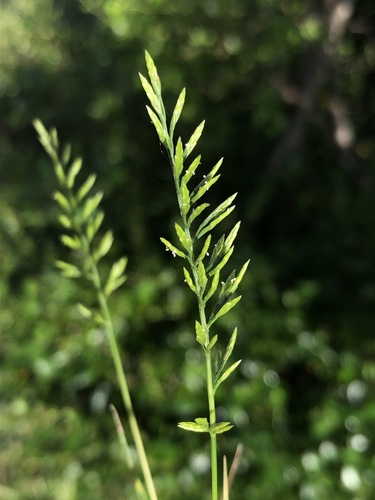
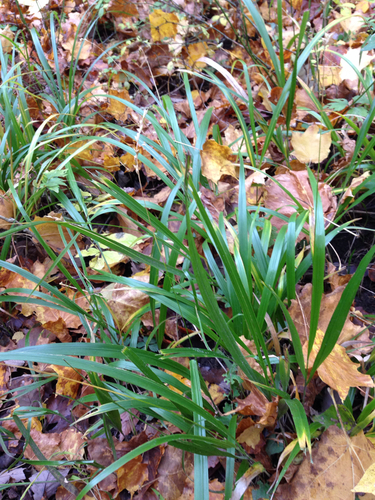
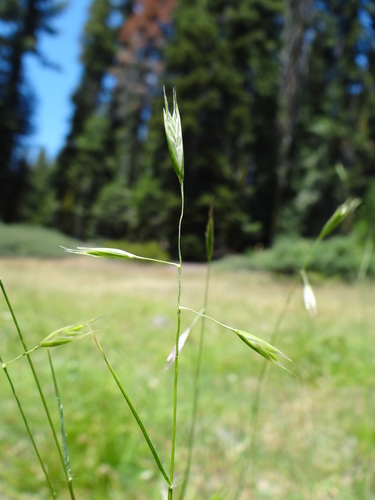
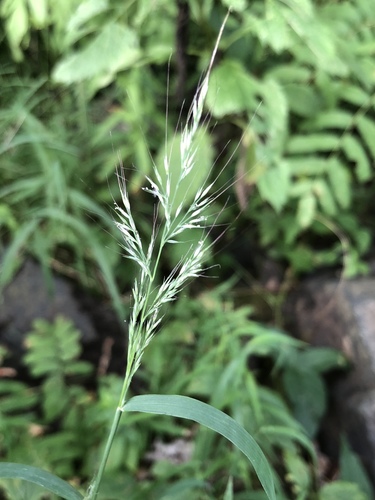
Muhlenbergia frondosa (Poir.) Fernald is a perennial grass that reaches 0.5 to 1.1 meters (1.5 to 3.5 feet) in height. It forms short, lateral branches along its central culm, and usually sprawls across the ground or over neighboring vegetation. It produces yellow blooms: in Texas, blooming occurs from March to May, while in Illinois the blooming period falls in late summer to autumn, and lasts 1 to 3 weeks for a single plant colony. Its florets are cross-pollinated by wind. After florets drop individually, their glumes remain behind on the plant. The grain fruits of this species are 1.6 to 1.9 mm long, and range in color from amber to brown.
This grass occurs across most of the central and eastern United States. Its natural habitats include moist to wet forest margins and openings, freshwater littoral areas, and grasslands. It is classified as invasive in some parts of Canada.
According to Illinois Wildflowers, Muhlenbergia frondosa is associated with a wide range of animals that feed on it or use it as refuge. It is consumed by insects ranging from dipterans to true bugs. Larvae of the gall fly Astictoneura agrostis form scaly galls on this plant. Other larvae that feed on this grass include those of the gall wasp Eurytomocharis muhlenbergiae, the grass fly Homaluroides ingratus, and the stink bug Hymenarcys nervosa. Adult insects that feed on the grass include the leafhoppers Plesiommata tripunctata and Flexamia imputans, and the aphids Schizaphis muhlenbergia and Anoecia cornicola. Additionally, birds probably eat its seeds, and cattle and other ungulates graze on the grass. Muhlenbergia frondosa grows in dense clusters that provide cover for small wildlife including rodents, reptiles, and arthropods.