About Muhlenbergia cuspidata (Torr. ex Hook.) Rydb.
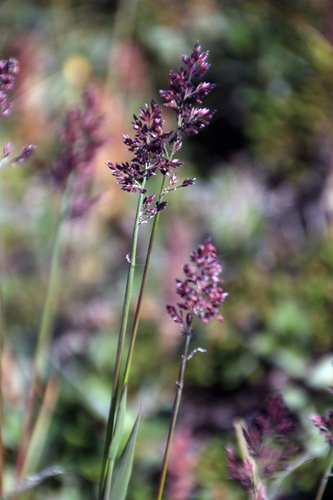
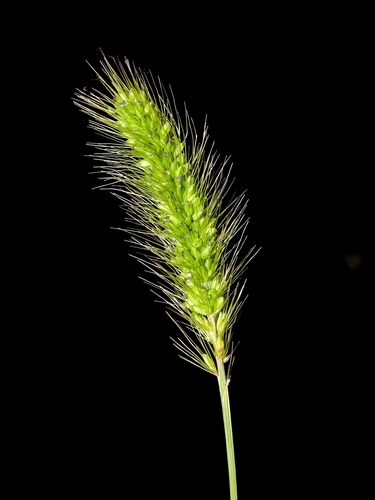
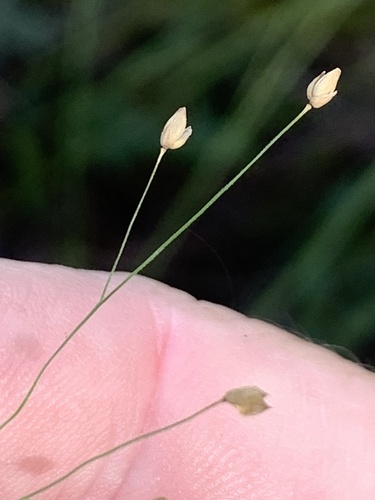
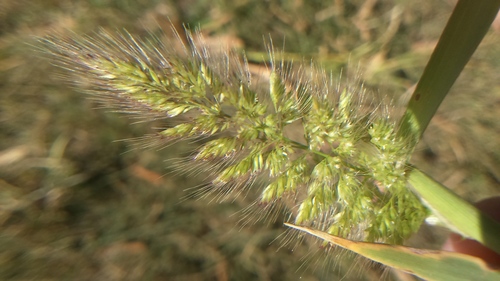
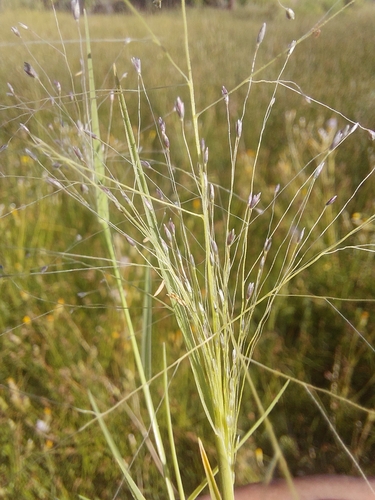
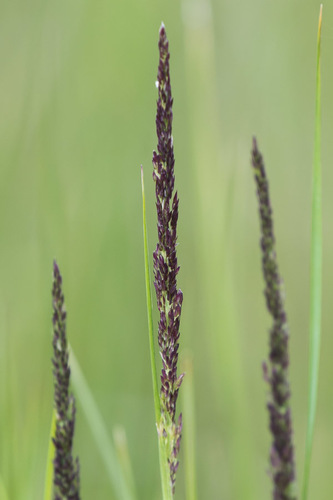
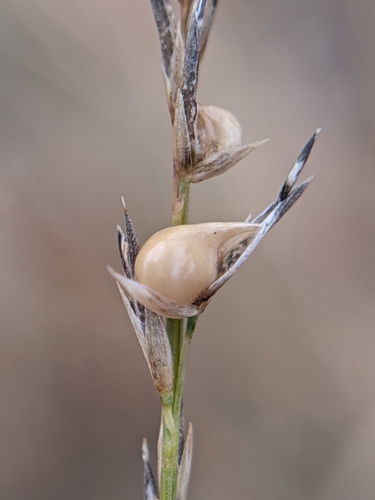
Muhlenbergia cuspidata (Torr. ex Hook.) Rydb. is a species of grass commonly called plains muhly. It is native to North America, distributed across central Canada and the central United States. This perennial grass grows in clumps and has shallow fibrous roots. Its stems have thick, knotty, scaly bases and reach up to around 60 centimeters tall. The leaves are narrow, and can be either flat or folded. The inflorescence is a very narrow, spikelike panicle, with an uneven row of short branches. The dark green or grayish spikelets usually hold one flower, though sometimes they hold two. Blooming takes place from June through October. This grass is most common in the northern Great Plains, where it grows in shortgrass prairie habitat. It is a dominant species on sloping land, and may be codominant alongside blue grama (Bouteloua gracilis) and western wheatgrass (Pascopyrum smithii). It also grows in mixed-grass prairies, sometimes codominating with little bluestem (Schizachyrium scoparium). It is a less common species in tallgrass prairies. It occurs most often on dry soils and is drought-tolerant, and can also grow on eroded land. Many animals use this grass: wild turkeys eat its seeds, a number of true bug species live only on this grass, and many wild and domesticated ungulates feed on it. Historically, the Navajo people used this plant to make hairbrushes and brooms.