About Morus mongolica (Bureau) C.K.Schneid.
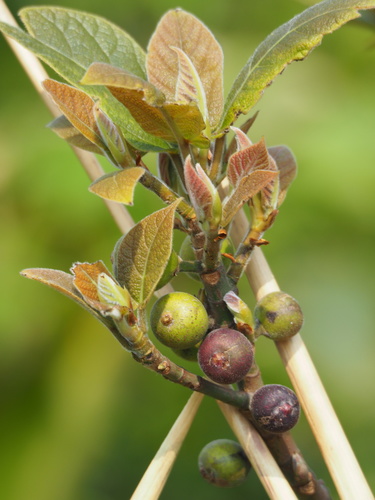
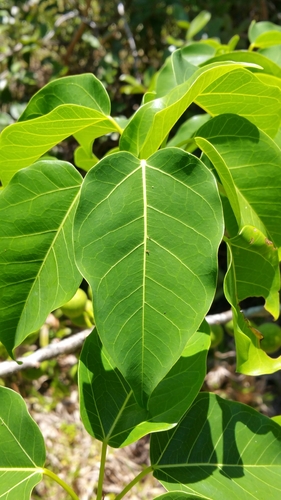
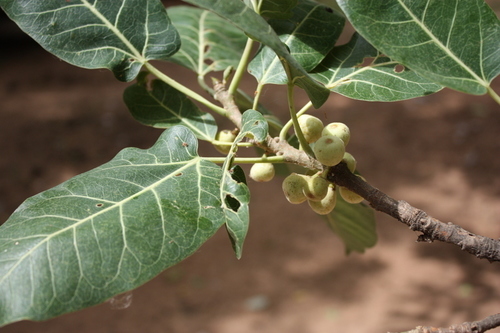
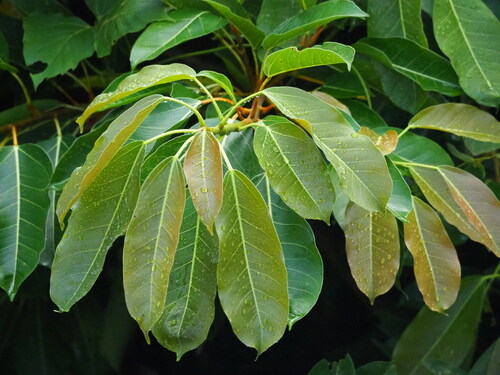
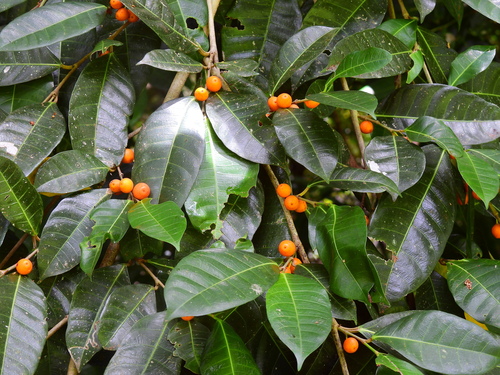
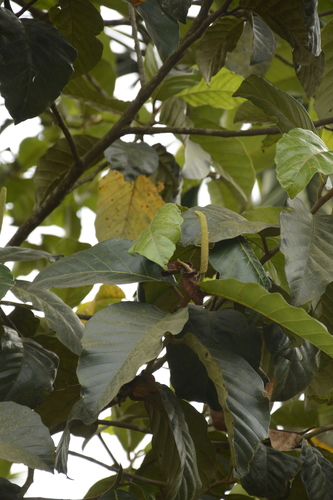
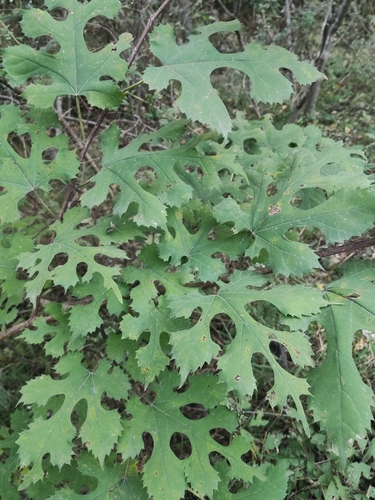
Morus mongolica (Bureau) C.K.Schneid. is a perennial woody tree. Mature individuals reach about 8 metres (26 feet) in height. Its leaves are palmate, with mature leaves measuring 8–15 centimetres (3+1⁄4–6 inches) long and 5–8 centimetres (2–3+1⁄4 inches) wide. This species produces both male and female flowers arranged in separate inflorescences. Male inflorescences grow to about 3–4 centimetres (1+1⁄4–1+1⁄2 inches) long and 7 millimetres (1⁄4 inch) wide, while female inflorescences are about 2 centimetres long and 7 millimetres wide. Both types of inflorescence have peduncles that measure approximately 1–1.5 centimetres long. Both male and female flowers have floral parts arranged in groups of four: male flowers hold four sepals, four petals, and four stamens, while female flowers hold four sepals, four petals, and four carpels. Morus mongolica blooms from March to April, and produces fruit from April to May. Its fruits are aggregate clusters that range in color from dull red to black. Each full fruit cluster is around 1–3 centimetres long and 1 centimetre in diameter, and the individual drupelets that make up the cluster are around 3 millimetres in diameter. This species is native to mountain regions of Mongolia, China, Korea, and Japan. In its ecosystem, silkworms eat and digest its leaves, and use the leaf proteins to produce cocoon silk. Human uses of the plant include consumption of its fruits by Mongol herdsmen. Like other softwood trees, its wood has been identified as a possible source of biofuel.