About Morella caroliniensis (Mill.) Small
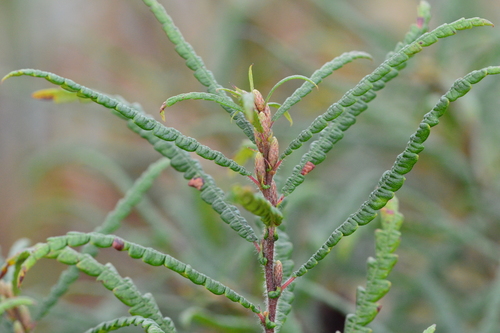
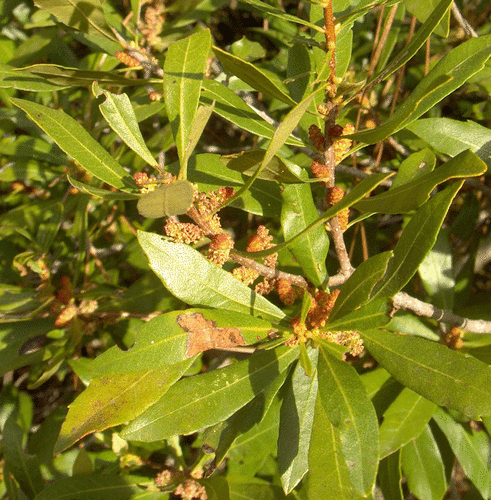
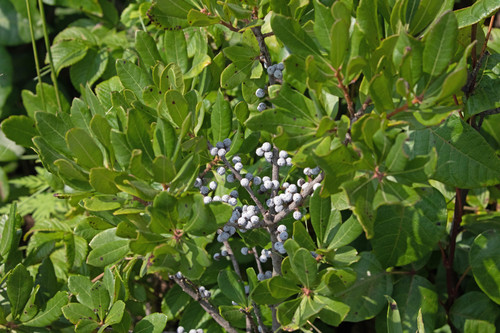
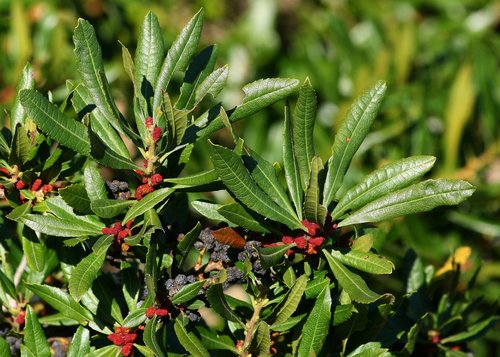
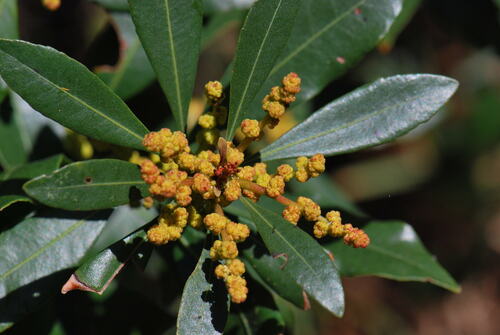
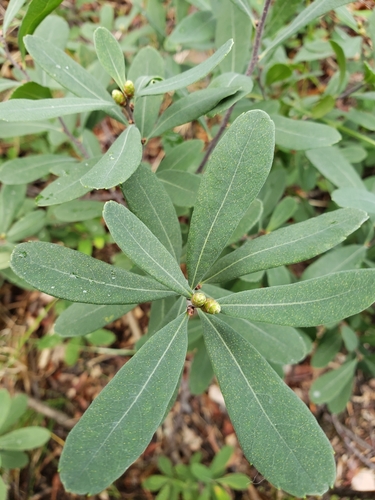
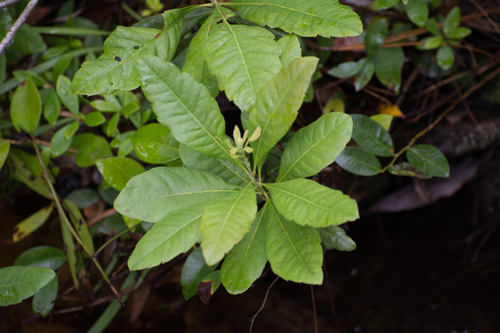
Morella caroliniensis (also called Myrica caroliniensis, or bayberry) is a shrub or small tree adapted to a range of environments from dunes to pocosins, and is mostly associated with wetlands. In its natural range, it grows along the U.S. east coast from Texas to Maryland. It is difficult to distinguish from Morella pensylvanica, which occurs as far north as Canada. This species is evergreen or tardily deciduous, and forms rhizomatous colonies. Its leaves are glandular, long, leathery in texture, and have serrated edges. The plant is dioecious, meaning male and female flowers are borne on separate individual plants. Male flowers have three to five stamens surrounded by short bracts. Female flowers develop into globular drupes covered in a waxy coating. This species flowers from spring to early summer, and produces fruit in late summer or fall. Bayberry is an actinorhizal plant: its roots have nitrogen-fixing nodules that form through a symbiotic relationship with the nitrogen-fixing actinobacterium Frankia. This allows it to tolerate nitrogen-poor, acidic soils such as those found in wetlands and dunes. The fruit is a source of food for many bird species, including northern bobwhite quail and wild turkey. In winter, the seeds are an important food source for Carolina wrens and tree sparrow species. To some extent, Morella caroliniensis also provides habitat for northern bobwhite quail. Birds' digestive systems remove the wax from the fruit, which is a prerequisite for seed germination.