About Morchellium argus (Milne Edwards, 1841)
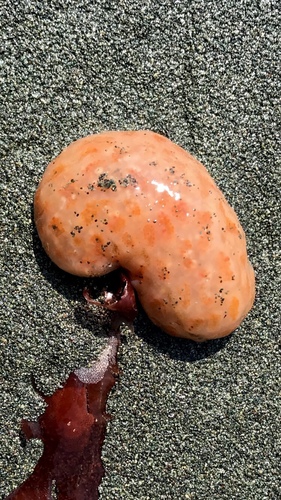
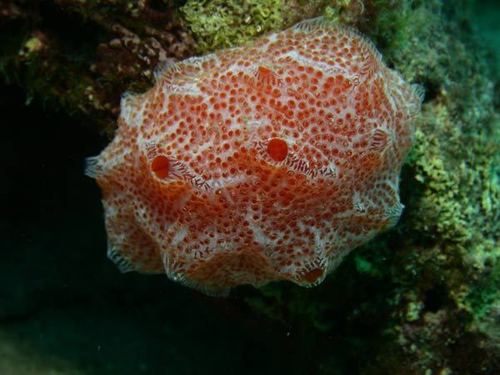
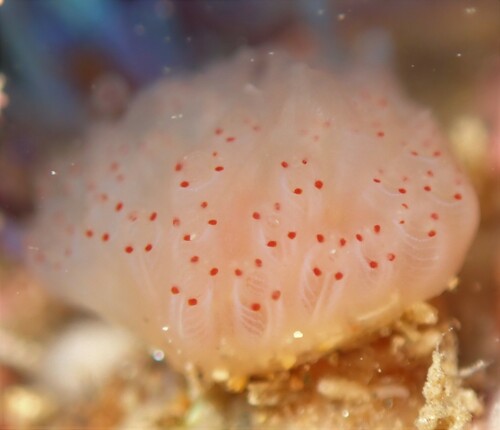
A colony of Morchellium argus, the red-spotted ascidian, is made up of a cluster of vase-shaped zooids. These zooids reach up to 4 cm (1.6 in) in length, and each is supported by a conical stalk about 1 cm (0.4 in) wide that sand sticks to. Each zooid has a buccal siphon with eight flaps, plus a tongue-like process located underneath the siphon. This siphon opens into a large pharynx that draws water into the zooid’s interior. The entire colony has a single exit siphon, which expels water collected from multiple zooids. Zooids of this species can be translucent white, pale pink, or red. Four small red spots at the entrance to the pharynx set this tunicate apart from similar species. Morchellium argus is native to the northeastern Atlantic Ocean. It is common around the coasts of Britain, ranging north as far as the Shetland Isles. It is also recorded from western France, including Arcachon Bay. This species occurs at depths down to approximately 10 m (33 ft). It grows mainly in caves, under overhangs, and on vertical rock surfaces, and is often found growing among foliose algae.