About Montrichardia arborescens (L.) Schott
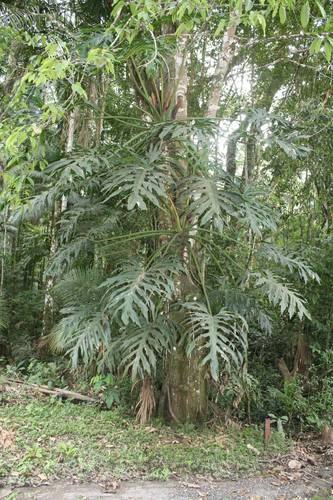
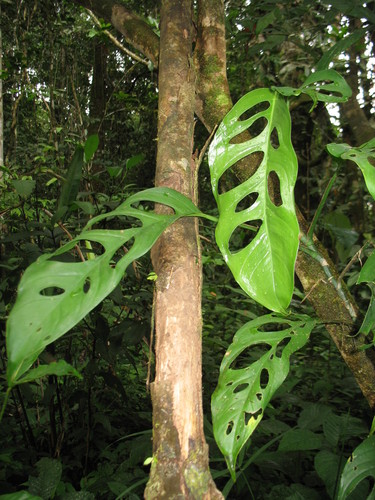
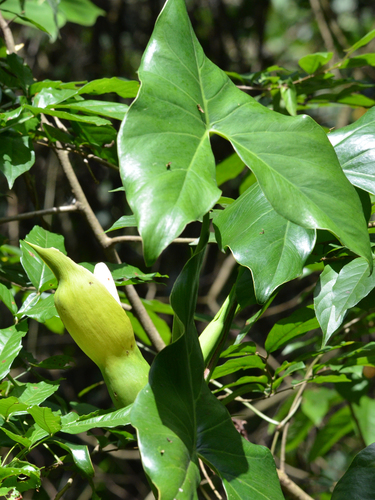
Montrichardia arborescens (L.) Schott typically grows to a stem height of 3 meters, and occasionally reaches 7 meters. Its stem is often swollen at the base, can grow up to 25 cm in diameter, and is sometimes covered with short prickles. Leaf stalks can reach up to 30 cm in length, while leaf blades range from 10 to 30 cm in size, with a distinct triangular shape except for lobes at the base. When mature, this species produces a cylindrical or ellipsoid spadix. Its seeds usually float to shore to germinate.
Montrichardia arborescens is native to tropical Americas and the West Indies, and is most commonly found in South America, the Caribbean, and Mesoamerica, including locations such as Puerto Rico, Panama, Guyana, Suriname, Venezuela, Brazil, and Colombia.
This species is a perennial aquatic shrub, most often found in bays and mangrove habitats, and grows best along the banks of rivers and creeks, and in swamps. It can grow in salt water, brackish water, and fresh water. It typically has a short viable lifespan, and cannot tolerate low temperatures. It grows best in full sun or partial shade, and can adapt to most soil types. Like many other aroids, it requires large amounts of water, but has some level of drought tolerance. It is often cultivated in or next to ponds, because it forms unusual and impressive stands. Geophytic tropical aroids are rarely cultivated in gardens, as they require more constant care.
As food, the fruiting spadix of Montrichardia arborescens is edible. Its seeds can be cooked or toasted before eating. Aroids including this species have long been a staple food for many tropical populations around the world, providing high-yield, nutritious crops that can be used as ingredients for specialized diets.
In Suriname, the milky juice from the stem is used to treat deep external cuts. The plant’s sap is confirmed to be caustic and can cause dermatitis. It has also been used to treat nose bleeds and sore eyes, and applied as a poultice to ulcers. Dried roots and leaves are taken to relieve hypertension, and shoot juice is used in other shamanic practices.