About Monomorium carbonarium (Smith, 1858)
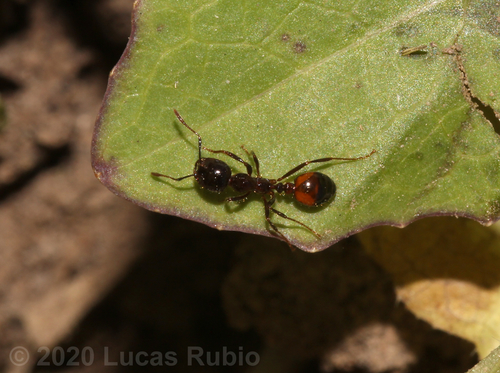
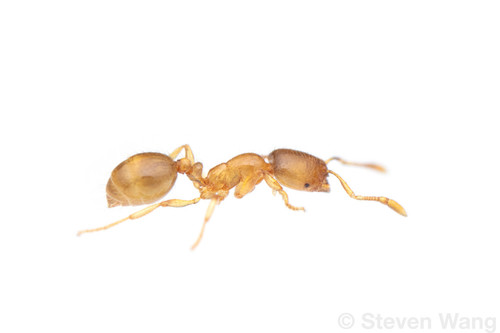
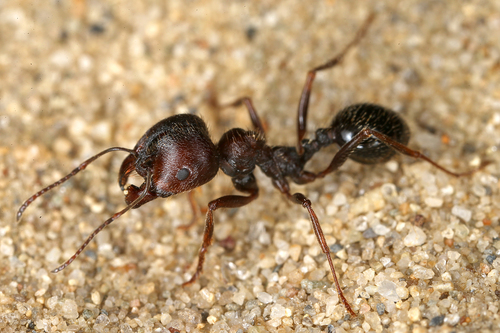
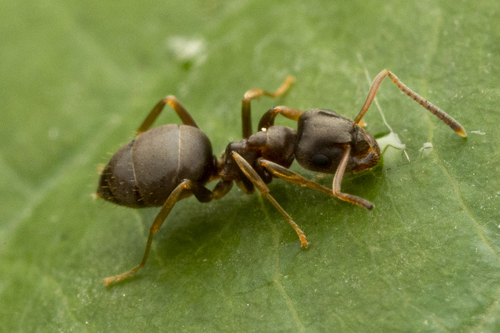
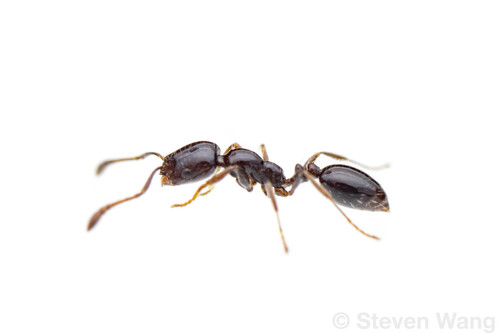
Monomorium carbonarium (Smith, 1858), also called the little black ant in North America, is an ant species native to both North America and Europe. Individuals of this species are shiny black. Worker ants measure 1 to 2 mm long, while queens measure 4 to 5 mm long. It is a monomorphic species, with only one caste of worker, and it is polygynous, so a single nest may hold more than one queen. Colonies are typically moderately sized, containing only a few thousand workers. M. carbonarium is a scavenger that feeds on a wide range of materials, from bird droppings to dead insects. It is also a known predator of codling moth larvae and fall webworm. Worker ants may forage inside households, but they build their nests in soil mounds. They harvest honeydew produced by aphids, including the soybean aphid (Aphis glycines). In mid-summer, mature queens and males conduct a nuptial flight and mate in midair. Males die shortly after mating. Each mated queen builds a new nest, sheds her wings, and begins laying eggs. Development from egg to adult takes approximately one month. In laboratory settings, queens have been recorded living around one year, while workers live around four months. In 2025, Seifert synonymized two formerly separate species, Monomorium minimum and Monomorium trageri, under M. carbonarium.