About Monomorium antarcticum (Smith, 1858)
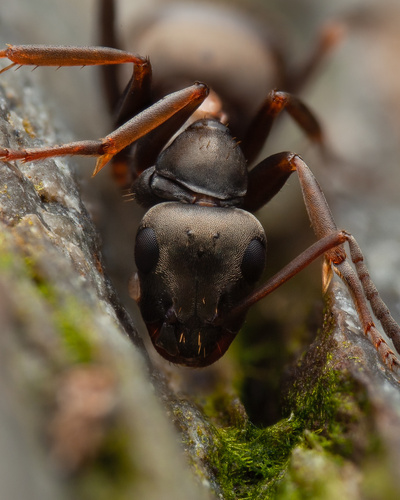
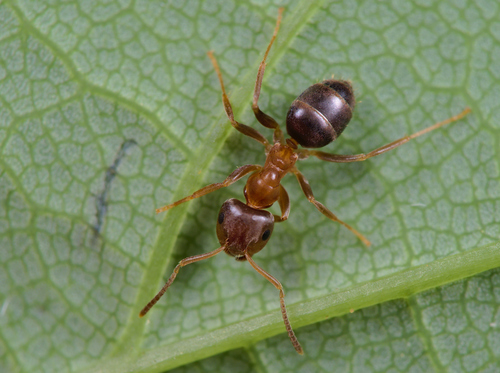
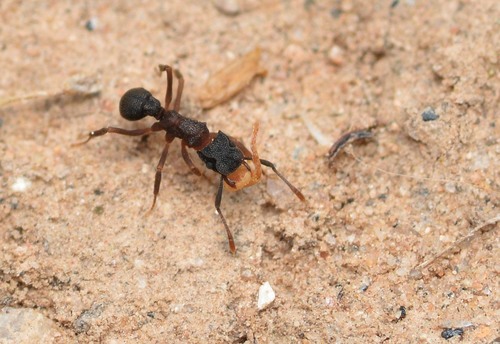
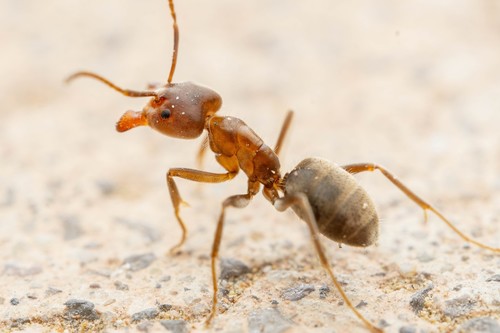
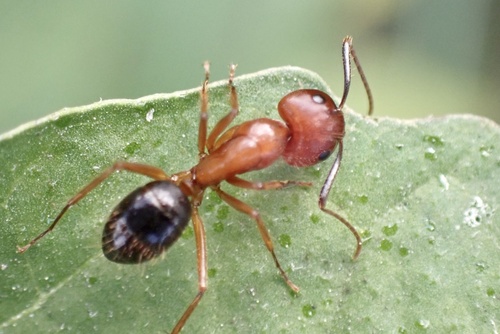
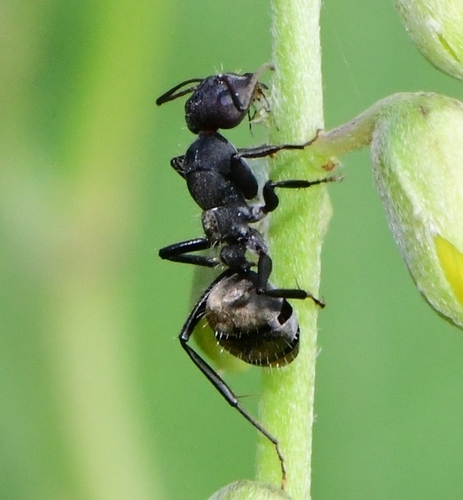
This species, currently listed under the scientific name Monomorium antarcticum (Smith, 1858), also appears in sources under the synonym Chelaner antarcticus. For worker specimens, body size is variable: workers typically measure 3–5 millimetres (0.12–0.20 in) in total length, and their head width ranges from 0.60–0.88 millimetres (0.024–0.035 in). All workers have 12-segmented antennae that end in a three-segmented club. A metanotal groove is always present, and it may be either distinctly or weakly impressed. Propodeal spines are either blunt or completely absent. Body colour is highly variable across different colonies, though colour is usually consistent within a single colony; colour ranges from orange, through light and dark brown, to black. This ant is endemic to New Zealand, where it is widespread across the North Island, South Island, and Stewart Island. It also occurs on many smaller New Zealand offshore islands, including the Three Kings Islands, Chatham Islands, and Kermadec Islands, and is additionally found in the remote Austral Islands of Polynesia. It can survive in a wide range of habitats, including native forest, grasslands, wetlands, pastureland, residential household gardens, and both horticultural and industrial areas. There is some evidence that the species' range in urban habitats may be restricted by competition from non-native exotic ant species, at least in the northern regions of New Zealand.