About Monobia quadridens (Linnaeus, 1763)
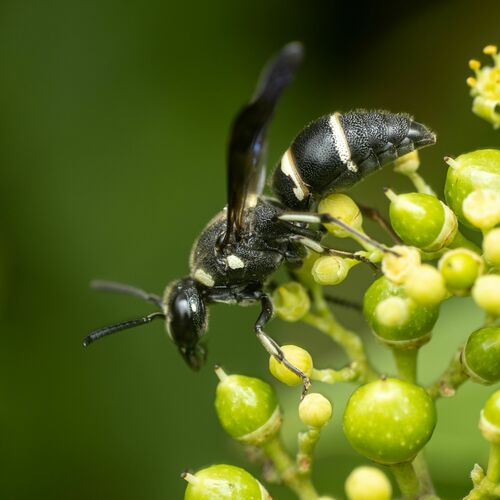
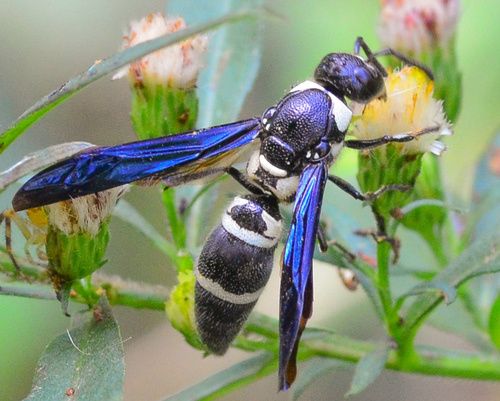
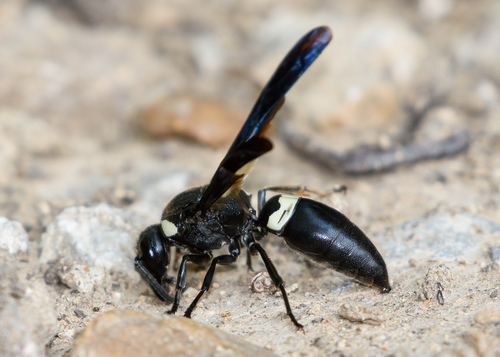
Monobia quadridens, first described by Linnaeus in 1763, is a wasp species with distinct physical traits. Its abdomen is entirely black, apart from a wide ivory band on the first abdominal tergite. Male wasps of this species typically have a wingspan ranging from 11.0 to 14.5 mm (0.43 to 0.57 inches), while female wingspans measure between 14 and 18 mm (0.55 to 0.71 inches). In both size and colouration, Monobia quadridens closely resembles another wasp species, Euodynerus bidens. This wasp has a broad distribution across eastern North America. In Mexico, it has been recorded in the states of Tamaulipas and Nuevo León. In the United States, its range extends from New Mexico, Kansas, and Wisconsin eastward all the way to the Eastern Seaboard. Buck documented the occurrence of Monobia quadridens in Canada in 2008, and specimens identified as this species have been held in Canadian entomological collections for a long time. Monobia quadridens is bivoltine, meaning it produces two generations each year. One generation emerges in summer, while the second generation overwinters as pupae and emerges the following spring. Copulation in this species lasts approximately 30 minutes, which is far longer than the one to two minutes typical for most wasp species. It builds nests in a range of different cavities, including tunnels that have been abandoned by carpenter bees, old mud dauber wasp nests, and hollow plant stems. The diet of Monobia quadridens consists mainly of microlepidoptera caterpillars from the families Pyralidae, Crambidae, Elachistidae, Amphisbatidae, Gelechiidae, and Tortricidae, with pollen also making up a large proportion of its food intake.