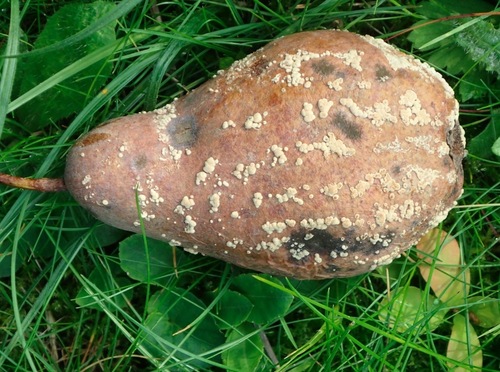
About Monilinia fructigena (Pers.) Honey
Monilinia fructigena (Pers.) Honey is a plant pathogenic fungus that causes fruit rot in apples, pears, plums, peaches, and cherries. A four-year study by Holb and Scherm (2007) found that integrated management paired with inorganic insecticides resulted in a lower Monilinia fructigena infection rate (6.4%) compared to plots using only organic insecticides (20.1%). Primary infection by this pathogen enters plants through wounds, so vector control is considered a logical approach to controlling the fungus. Certain fungicides—specifically pyraclostrobin and boscalid—applied after spring bloom are effective at preventing primary infection by Monilinia fructigena. Conidia produced by the fungus are spread by wind during periods of high temperature and low relative humidity, and they can also be spread by rain drops. When rain dislodges and spreads conidia, the water also provides moisture needed for spore germination and mycelial development.