About Monilesaurus rouxii (Duméril & Bibron, 1837)
Size
Monilesaurus rouxii can reach a maximum total length of 30 cm (12 inches) when including the tail, though 25 cm (9.8 inches) is a more typical size.
Body Coloration
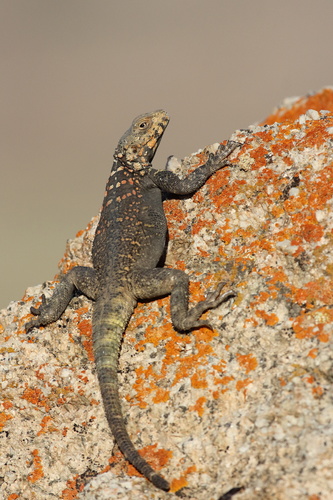
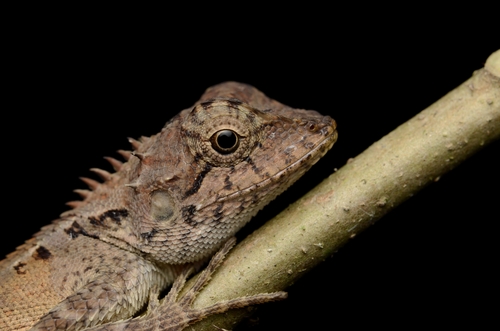
Its body is olive-brown, with a lighter-colored belly. It has a dark band running along the side of the head onto the neck, and dark lines that radiate outward from the eye.
Limb Structure
Its limbs are slender, with elongated toes.
Neck Spines
Two small clusters of spines are present on each side of the neck.
Breeding Coloration
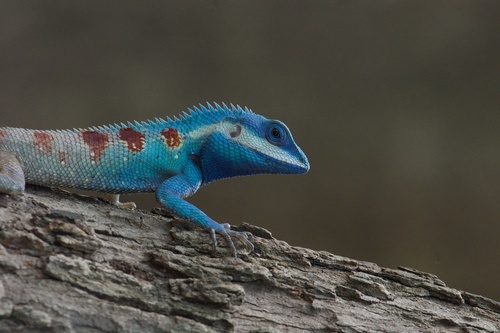
During the breeding season, the upper head, nape, and gular pouch of male individuals turn brick-red.
Endemic Range
This species is endemic to the hills of peninsular India.
Geographic Distribution
Its range covers the Western Ghats from Surat Dangs to Palghat, parts of the Eastern Ghats including Shevaroys, Yelagiri, Melagiri, Malkangiri, Araku, and Devarakonda, and the hills of the Deccan plateau including Bellary and Sandur. It has mostly been recorded from wet hill forest areas of peninsular India, excluding the far south.
Population Status
It is generally widespread and common across all of its native range.
Elevation Range
It occurs at elevations between 100 and 900 m (330–2,950 ft) above sea level, and occupies forest habitats from moist evergreen forest to secondary deciduous forest.
Diet and Activity
Monilesaurus rouxii is an insectivorous, diurnal species that hunts both on the ground and in trees.
Reproduction
It is oviparous, and breeds between the months of April and September.