About Monarda didyma L.
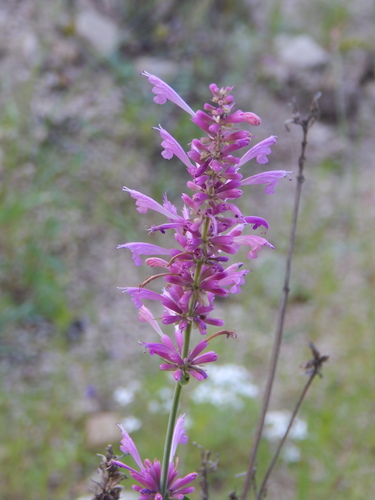
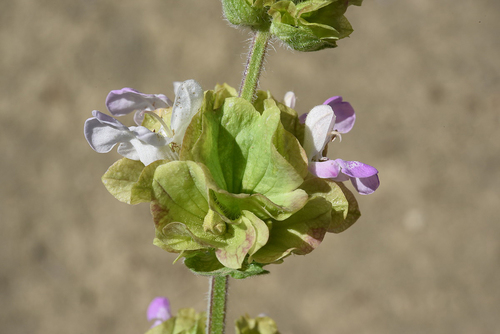
Monarda didyma L. (also commonly called crimson beebalm) is a perennial herb. It reaches 0.6 to 1.2 meters (2 to 4 feet) in height and spreads 0.4 to 0.6 meters (1½ to 2 feet) wide. Its medium to deep green leaves measure 7 to 15 centimeters (3 to 6 inches) long, with an ovate to ovate-lanceolate shape and serrated edges. Leaves grow in opposite arrangements along square, hollow stems, and release a minty scent when crushed. The plant's overall odor is similar to that of bergamot orange, the citrus used to flavor Earl Grey tea. Its bright red flowers are ragged and tubular, 3 to 4 centimeters (1 to 1½ inches) long. Flowers grow in showy rounded heads of around 30 blooms, accompanied by reddish bracts. This species grows in dense clusters along stream banks, moist thickets, and ditches, and blooms for approximately 8 weeks from early to late summer. Monarda didyma is native to eastern North America, where its native range extends from Maine west to Ontario and Michigan, and south to northern Georgia. It has become naturalized in areas further west in the United States, as well as in parts of Eurasia. This plant attracts hummingbirds, and acts as a larval host for three moth species: the hermit sphinx, raspberry pyrausta, and orange mint moth. Crimson beebalm is widely grown as an ornamental plant both inside and outside of its native range. It grows best in full sun, but can tolerate light shade, and thrives in any moist, well-drained soil. Several cultivars have been selected to produce different flower colors, ranging from white and pink to dark red and purple. Beebalm has a long history of use as a medicinal plant by many Native American groups, including the Blackfoot. The Blackfoot people identified this plant as having strong antiseptic properties, and used plant poultices to treat skin infections and minor wounds. An herbal tea made from the plant was also used to treat mouth and throat infections caused by dental caries and gingivitis. Beebalm is a natural source of the antiseptic thymol, which is the primary active ingredient in modern commercial mouthwash formulas. The Ho-Chunk people used an herbal tea made from beebalm as a general stimulant. Native American groups also used it as a carminative herb to treat excessive flatulence. Native Americans living in Oswego, New York made tea from the plant's leaves, which gave rise to one of the plant's common names.