About Molothrus bonariensis (Gmelin, 1789)
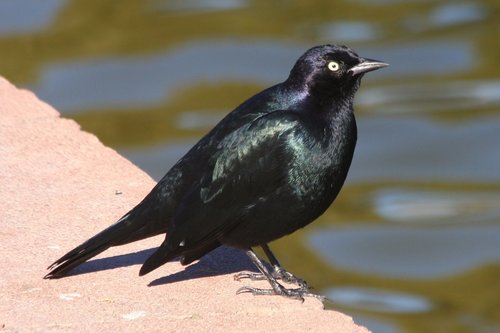
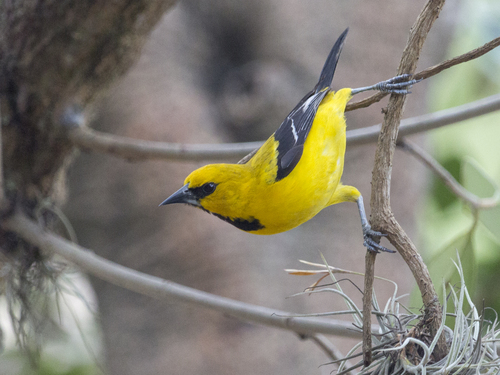
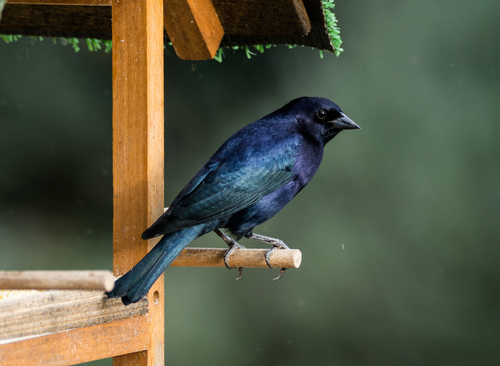
Adult shiny cowbirds (Molothrus bonariensis) vary in physical appearance across different subspecies. Their body size ranges from a mass of 31–40 grams (1.1–1.4 oz) and a length of 18 cm (7.1 in) for M. b. minimus, to a mass of 55–65 grams (1.9–2.3 oz) and a length of 22 cm (8.7 in) for M. b. cabanisii. For the nominate subspecies M. b. bonariensis, basic adult plumage is black with purple-blue iridescence in males, and dusty gray-brown in females. M. b. cabanisii males have plumage matching that of M. b. bonariensis, while M. b. cabanisii females are paler in color. M. b. aequatorialis males have violet iridescence, and their females are dark-colored. M. b. occidentalis males have rich purple iridescence; their females are distinct from other subspecies, with a pale upper body and very pale, streaked underparts. M. b. venezuelensis males look similar to M. b. occidentalis males, and M. b. venezuelensis females are dark-colored. M. b. minimus males look similar to M. b. bonariensis males, and M. b. minimus females have a darker head than M. b. bonariensis females, plus streaked scapulars and inter-scapulars. M. b. riparius males are similar to M. b. bonariensis males, and M. b. riparius females have darker upper bodies and paler underparts than M. b. bonariensis females. When shiny cowbirds hatch, they are altricial and stay confined to the nest. Newly hatched individuals are covered in gray down. Juvenile males have dark upper bodies, dull gray underparts streaked with dark brown or black, and a buff abdomen. Juvenile females are buff brown on the upper body, with light buff, brown, or gray underparts that may or may not be streaked with brown. Shiny cowbird eggs are ovate in shape, and come in two morphs: a spotted morph and an unspotted "immaculate" morph. Eggs are usually white, though they sometimes have a light blue, light gray, or buff hue. The shiny cowbird is a year-round resident across most of South America, where it inhabits open areas including open forests and cultivated land. Over the last century, the species' range has shifted northward, and individuals have been recorded in the West Indies and southern Florida. This northward range shift is the result of increased human conversion of forests into open cultivated and agricultural land, which are the shiny cowbird's preferred habitats. This range expansion into new areas allows the shiny cowbird to exploit new, naive host species.