About Mollugo verticillata L.
Scientific Nomenclature
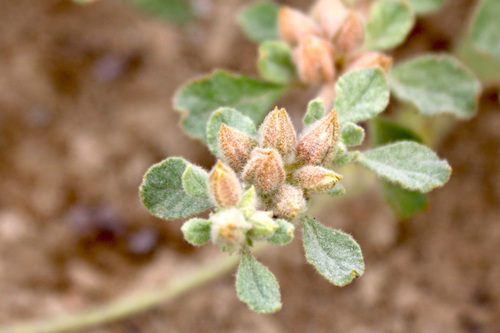
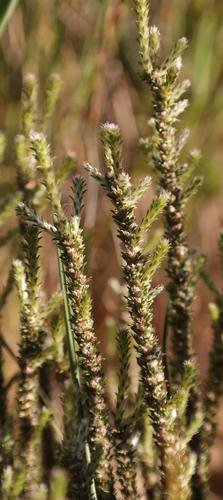
Carpetweed, scientifically named Mollugo verticillata L., has narrow whorled leaves, with 3 to 8 leaves growing at each node.
Leaf Arrangement
Mature plants may lose their characteristic basal rosette shape.
Leaf Morphology
Leaves are roughly 1 to 3 cm long, obovate in shape, and their leaf apex can range from rounded to acute.
Growth Habit
This plant has a prostrate growth habit, sprawling across soil to form mats.
Flowering Period
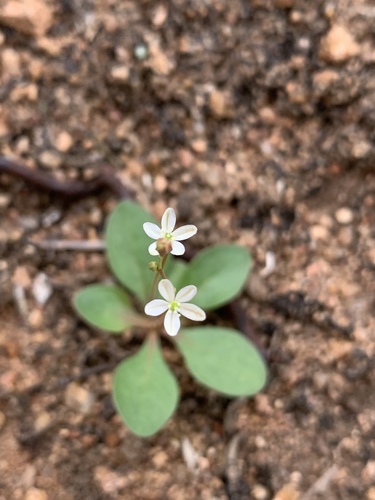
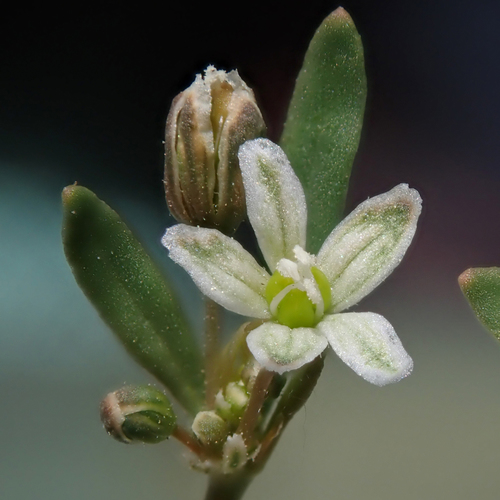
Its flowers typically grow in clusters of 2 to 5, and bloom between July and September.
Flower Characteristics
The flowers are white or greenish-white, and grow on tiny stalks 5 to 15 mm long.
Fruit Development
Flowers quickly develop into egg-shaped fruits that measure 1.5 to 4 mm in length.
Fruit Type
The fruit is a dehiscent capsule that opens when it reaches maturity.
Seed Traits
Seeds are 0.5 mm long, and range in color from red to rusty brown.
Species Distribution
Mollugo verticillata has a very wide distribution, found across North America, Brazil, Colombia, Mexico, the West Indies, Central America, South America, Eurasia and Africa.
Origin Hypotheses
Multiple studies agree that this species originated in New World tropics before spreading into more temperate regions, but overall its origin has been credited to the tropics or subtropics of both the northern and southern hemispheres.
North American Habitat
It is commonly found in warm and/or wet environments across North America.
Traditional Uses
Along with other members of the genus Glinus in the family Molluginaceae, Mollugo species are edible, and have historically been used as vegetables or for medicinal benefits.
Family Bioactive Compounds
The family Molluginaceae has been studied for its therapeutic properties, because its members produce triterpene saponins and flavonoids.
Species Immunomodulatory Potential
One study has indicated that ethanolic extracts of Mollugo verticillata could act as a potential immunomodulator.
Family Pharmacological Properties
In general, the chemical composition of species in the family Molluginaceae has antifungal and anti-inflammatory properties.