About Mniotype adusta Esper, 1790
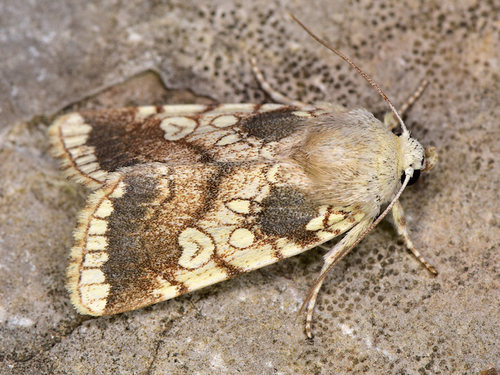
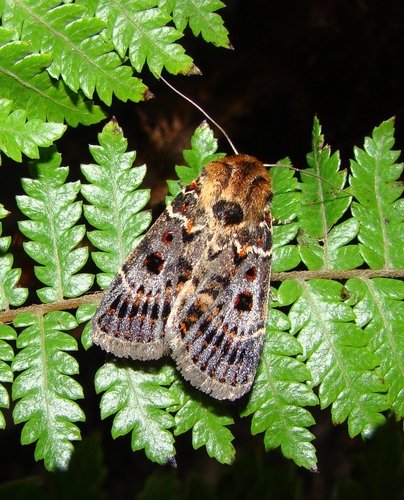
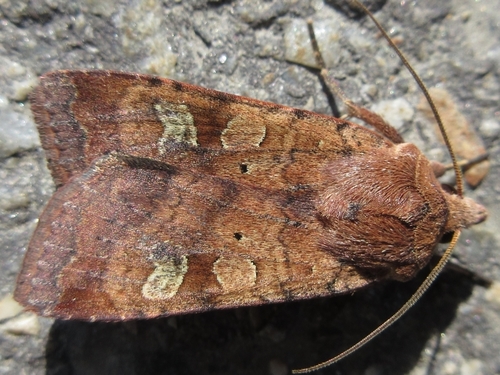
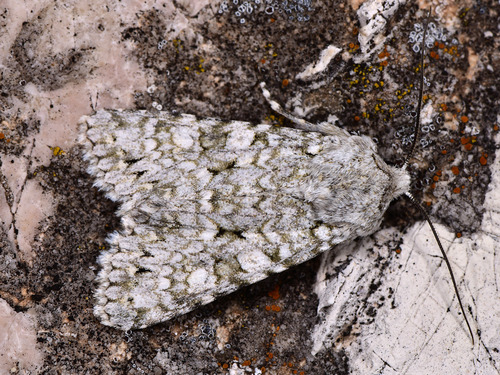
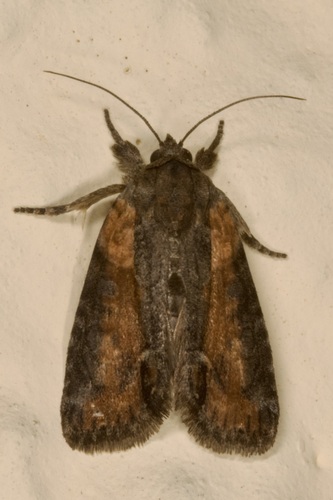
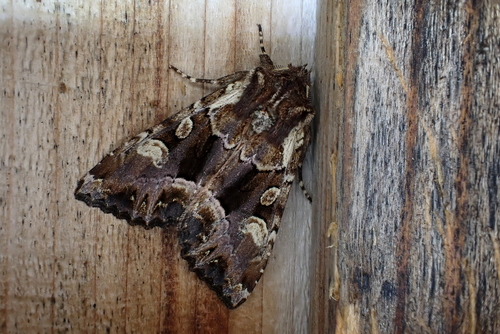
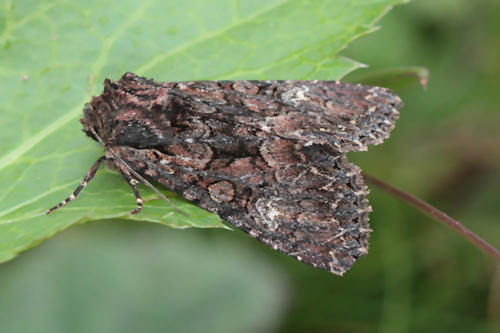
Mniotype adusta Esper, 1790 has a wingspan of 42–48 mm. Its forewings are rufous-brown, clouded with darker shading; the veins are black, dotted with white. There is a slight black mark below the base of the cell, and a short black streak extending from the inner margin near the base. The inner and outer lines are blackish and double, forming black white-tipped teeth along the veins. The claviform stigma is blackish and acute, lying on a black streak that connects the two lines. The orbicular and reniform are reddish grey, edged with black; the reniform stigma has some whitish coloring in its outer half. The submarginal line is white, preceded by black wedge-shaped marks. The hindwing of the male is whitish, with a grey termen, and has a dark cellspot and dark veins; female hindwings are much greyer. This species is generally widespread across Europe. In Asia, it has been recorded in Armenia, Asia Minor, Western and Eastern Siberia, Western and Eastern Turkestan, and Tibet. Several distinct forms have been documented: vulturina Frr., from Southern Russia, has darker forewings variegated with white; duplex Haw. is a dark, unicolorous form that occurs in Scotland and Northern England; sylvatica Bell, from Corsica, is a grey, obscurely marked insect with no brownish tinge; septentrionalis Hoffm. is a small black form from Finland, the Baltic provinces, and the Ural Mountains; moesta Stgr. from Dauria may be a synonym of this form; vicina Alph. from Central Asia is paler, more violet brown, with clearly defined markings; anilis Bsd. is whitish, heavily dusted with black, and has no trace of red-brown tinge. Additional information can be found on the Dutch Wikipedia entry for this species.