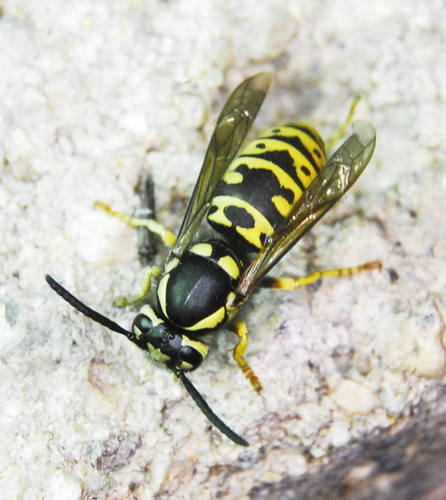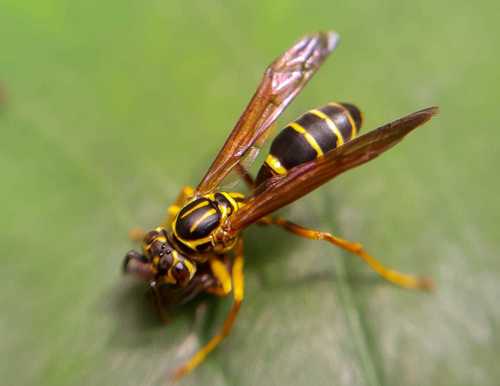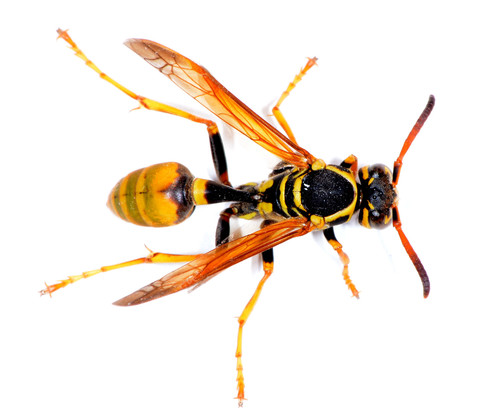
About Mischocyttarus flavitarsis (de Saussure, 1854)
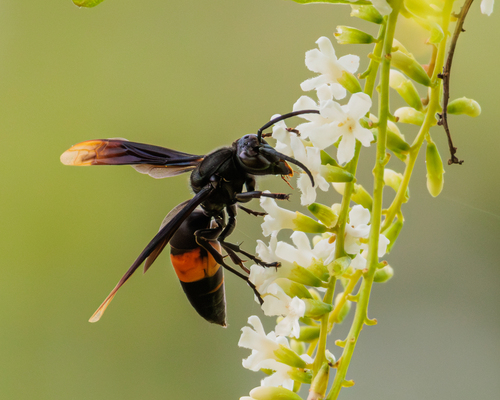
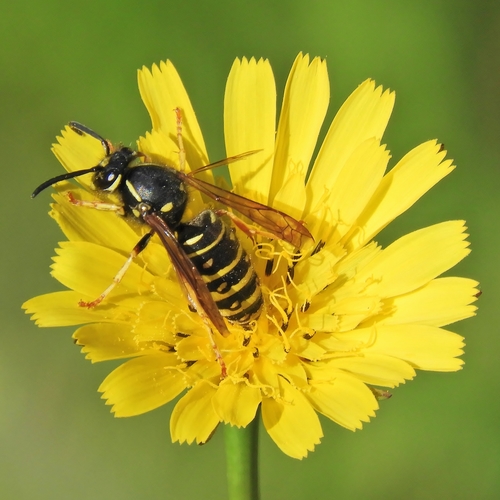
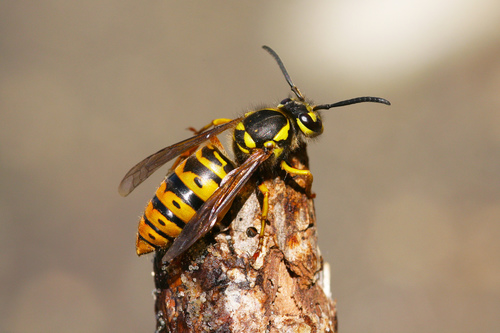
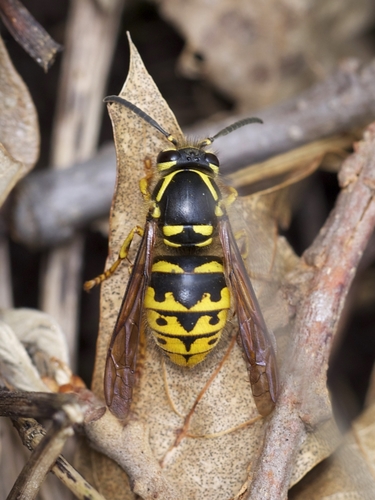
Mischocyttarus flavitarsis is a social paper wasp native to western North America. This species can build nests both in forest habitats near rivers and in areas close to human habitation, most often under roof eaves. Even though their nests are commonly located near human spaces, M. flavitarsis typically does not sting when threatened, and will instead ram into threatening individuals instead. The colony cycle of M. flavitarsis usually starts before May and continues through to October. At the end of the cycle, the queen leaves to find a hibernation site to survive the winter. Males perch near these female hibernation sites to mate with emerging females. Males mark and defend their territories by rubbing their sternal brushes along the territory borders, leaving behind a chemical that discourages other males from entering the area. M. flavitarsis feeds on arthropods, nectar, and animal carcasses, and is commonly preyed on by birds, ants, and praying mantises. This species is distributed across western Canada and the western United States, with a range extending from southern California in the south to British Columbia in the north. In natural habitats, the wasps most often build nests in riparian forests at elevations between 1500 and 2700 meters. At lower elevations within this range, nests are built in deciduous trees and hardy evergreens, while at higher elevations nests are located in conifers. Nests in natural habitats are almost always found within 50 meters of a river. M. flavitarsis also regularly nests in human-built environments, especially in protected spaces like wall voids and the underside of eaves.