About Mischocyttarus drewseni (de Saussure, 1954)
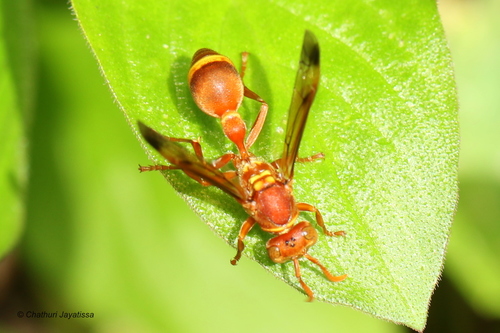
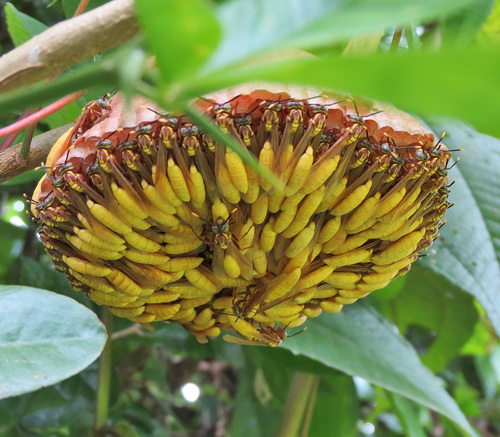
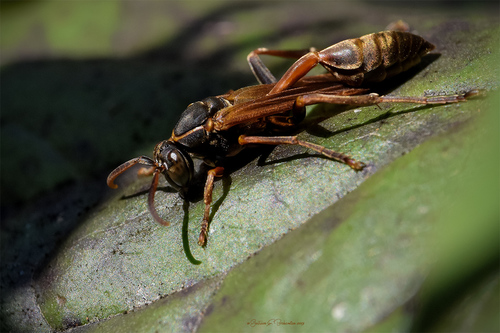
Mischocyttarus drewseni, first formally described by de Saussure in 1954, are mid-sized slender wasps ranging in length from 1.5 to 1.8 cm, with a brown to black body color. Individuals of this species have an elongated first abdominal section. The entire Mischocyttarus genus has several unique identifying features: adult wasps in this genus have asymmetrical tarsal lobes not found in adults of any other wasp genus. Mischocyttarus larvae also have distinct traits, including 1 to 3 lobes on their first abdominal segment and large thoracic spiracles. M. drewseni occurs exclusively in Neotropical habitats, mostly across South America, where it has been recorded in Guyana, Suriname, Venezuela, Brazil, Peru, Paraguay, Colombia, and Argentina. This species most often builds nests in swampy areas with tall grass; foraging typically occurs in the low grasses that surround these nests. M. drewseni nests have also been found in semi-urban environments, where the wasps interact more frequently with humans and human food. In semi-urban areas, nests are usually placed in protected spots such as under the eaves of buildings or in barns.