About Miscanthus floridulus (Labill.) Warb. ex K.Schum. & Lauterb.
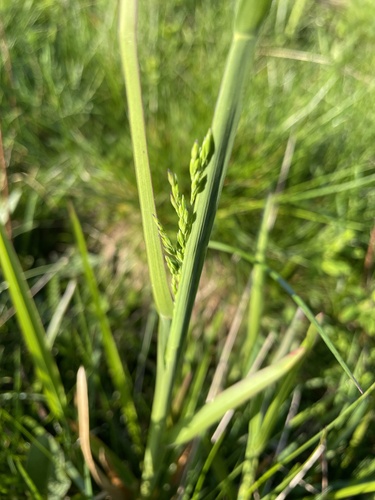
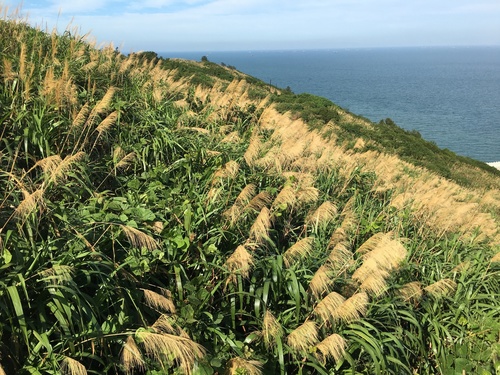
Miscanthus floridulus, commonly called Pacific Island silvergrass, is a species of perennial grass in the grass family Poaceae. It is native to regions of eastern and southeastern Asia and Pacific islands. On the Asian mainland, it is native to southern China, Laos, Vietnam, Myanmar, and Peninsular Malaysia. It is also native to Japan, the Ryukyu Islands, Taiwan, Hainan, the Philippines, Sumatra, Java, the Lesser Sunda Islands, Sulawesi, Maluku, New Guinea, the Bismarck Archipelago, Solomon Islands, Vanuatu, New Caledonia, and Fiji, as well as parts of Micronesia (including the Caroline Islands, Marshall Islands, and Gilbert Islands) and Polynesia (including the Cook Islands, Marquesas Islands, Niue, Samoan Islands, Society Islands, Tonga, Tuamotu Archipelago, Tubuai Islands, and Wallis and Futuna). It has been introduced to Hawaii, the Mariana Islands, and the U.S. mainland states of Arkansas and Missouri. In the Highlands Region of Papua New Guinea, this species grows naturally and is locally known as pit pit grass. Local communities use its stems for several purposes. Mature stems are used to build garden fences and to construct the outer walls of traditional houses. Remote households burn dried stems to light their homes. Children walking to school carry burning torches made from this grass's stems to their destination; these torches are about 1–2 m (3.3–6.6 ft) long and burn slowly. Children begin their walk as early as 5 a.m. because the distance they travel is long.