About Millettia pachycarpa Benth.
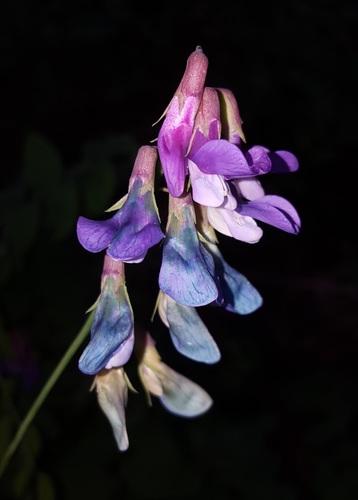
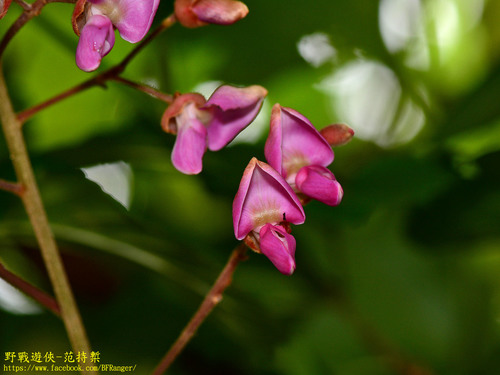
This species is currently also known by the scientific synonym Derris taiwaniana. It is a climbing shrub. Its leaves have 13 to 17 papery leaflets; the complete rachis (including the petiole) measures 30–50 cm (12–20 in), with the petiole itself measuring 7–9 cm (3–4 in). Leaflet blades are shaped elliptic-oblong to lanceolate-oblong, with bases ranging from cuneate to rounded, and acute apices. Flowers are lilac-colored. They are arranged in pseudoracemes, which grow with two to six branches beneath new stems and reach 15–30 cm (6–12 in) in length. The pseudoracemes are covered in brown tomentose hairs, and their rachis nodes hold clusters of two to five flowers on a 1–3 mm (0.039–0.118 in) spur. It produces dark brown, inflated legumes. Legumes are oblong, or ovoid when containing only one seed, and are densely covered with rough, pale yellow warts. Each leguminous pod holds one to five dark brown, reniform seeds. Among tribal communities of northeast India and the Tsou people of Taiwan, juice extract from crushed roots and seeds of this plant is widely used as a traditional fish poison, giving it the common name 'fish poison climber'. Users smash the plant parts against rocks to let the juice run into the water. The juice stupefies and then paralyzes fish, which can then be collected by hand, net, or basket. In traditional Chinese medicine, this plant is used as a blood tonic, to stimulate red blood cell growth, and as part of a cancer therapy preparation called 'Jixueteng'. Some native tribal groups in northeast India use a crushed concoction made from this plant's leaves, and eat its root bark directly, to treat intestinal infections.