About Micromelum minutum (G.Forst.) Wight & Arn.
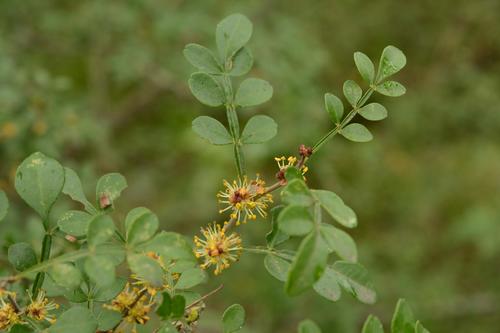
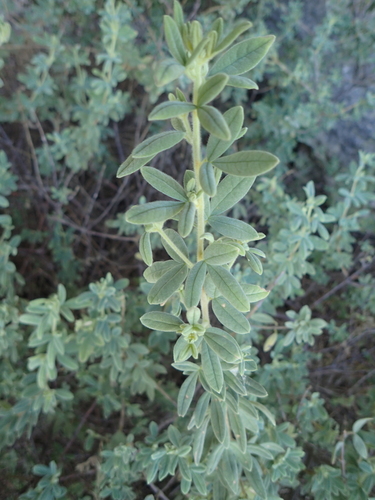
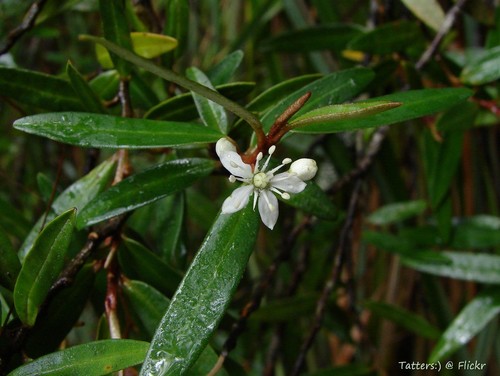
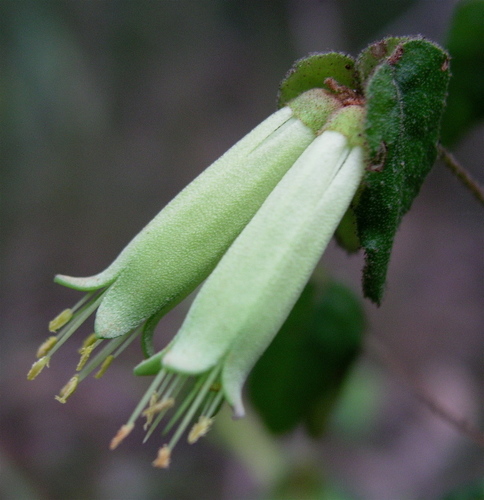
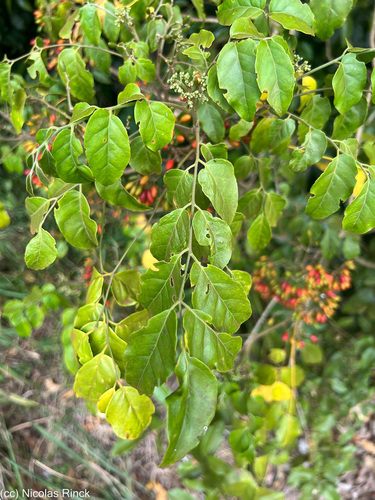
Micromelum minutum (G.Forst.) Wight & Arn. is most commonly a tree reaching 10–20 meters (33–66 feet) in height, but it can also flower and produce fruit when growing as a dense shrub. Its leaves are pinnate, growing up to 300 millimeters (12 inches) in total length, and hold seven to fifteen leaflets. Each leaflet is egg-shaped to lance-shaped, measuring 30–120 millimeters (1.2–4.7 inches) long and 15–60 millimeters (0.59–2.36 inches) wide, attached by a petiolule up to 5 millimeters (0.20 inches) long. Flowers of this species grow in large, hairy, scented clusters 130–200 millimeters (5.1–7.9 inches) long. Each individual flower sits on a pedicel up to 5 millimeters (0.20 inches) long. The petals are pale green or creamish, 5–8 millimeters (0.20–0.31 inches) long, and there are ten stamens that alternate in length. Flowering can occur year-round, and the resulting fruit is a yellow to orange or red, oval to spherical berry around 10 millimeters (0.39 inches) long. Micromelum minutum grows as an understorey plant in rainforest, including dry rainforest and monsoon forest, at altitudes from sea level up to 600 meters (2,000 feet). It can also grow in sandstone gorges and on karst formations far inland. This species is native to Malesia, New Caledonia, Fiji, and northern Australia. In Australia, it occurs in the Kimberley region of Western Australia, the northern part of the Northern Territory, and areas south from the Cape York Peninsula in Queensland. It was recorded in New South Wales before 1911. The larvae of some butterfly species, including the orchard butterfly (Papilio aegeus) and the canopus butterfly (Papilio fuscus), feed on this plant as a food source. In Malesia and Indonesia, this species, also called limeberry, is used as medicine, and its timber is used for construction.